
Introduction
When we think about what plants offer us humans, the first thing that could come to mind is food. After all, they are necessary for keeping us alive thanks to their supply of nutrients and vitamins. Nevertheless, beyond nutrition, plants provide a wide range of practicalities for human cultures, such as building material, ornamental decoration and medicinal purposes. For example, poppies, mandrakes and myrrh are just a few of the the different medicinal plants and derived products listed in Sumerian tablets dating from 3000 BCE. Like plants, fungi can be seen mainly as a source of food, either edible mushrooms or yeasts used in beer brewing. But their use does not end there, and like plants, they have potential for curing diseases. Unlike traditional medicinal plants, the healing potential of fungi has only skyrocketed in the last century after the discovery by Alexander Fleming in 1928 of penicillin production by the fungus Penicillium notatum.
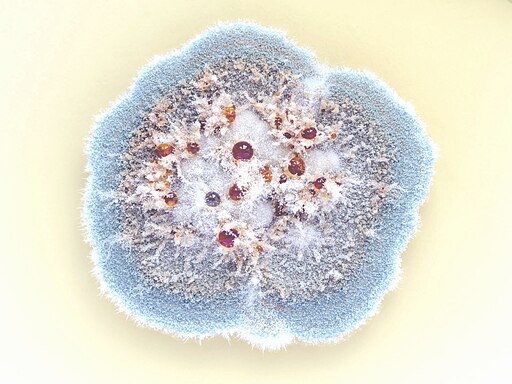
There are few examples of traditional uses of fungi for medicinal reasons though. Chinese people have used red yeast rice since the 3rd century BCE with the purpose of helping digestion, and it is currently used to decrease blood cholesterol levels. Despite the name, there are no yeast involved in the elaboration of red yeast rice, since the organism used, Monascus purpureus, is considered a mold. Indeed, unlike mold fungi (e.g. Penicillium), yeasts don’t seem as useful as a source of natural pharmaceuticals. However, their DNA is easier to manipulate, which has made them one of the main producers of biopharmaceuticals.
Biopharmaceuticals are pharmaceuticals that have been produced through genetic engineering or other modern biology techniques. Biopharmaceuticals are most commonly produced through engineering of bacteria, yeast or mammalian cells. Although mammalian cells, normally ovarian hamster cells, are the most similar production host to humans, they are harder to grow at large scales and more tricky to engineer, which makes their use more time consuming and expensive. On the opposite side of the spectrum bacteria are very easy to engineer and grow in large scales, but they lack specific human-like mechanisms that prevent them from producing certain biopharmaceuticals. Nevertheless, the first biopharmaceutical to enter the marker was insulin produced by the bacteria Escherichia coli in 1982. Yeast fit somewhere in the middle between these options, easier to grow and engineer than mammalian cells, but with more human-like cellular mechanisms than bacteria. Next you can find some examples of different biopharmaceuticals that have been produced using yeast.
Hormone production
Insulin
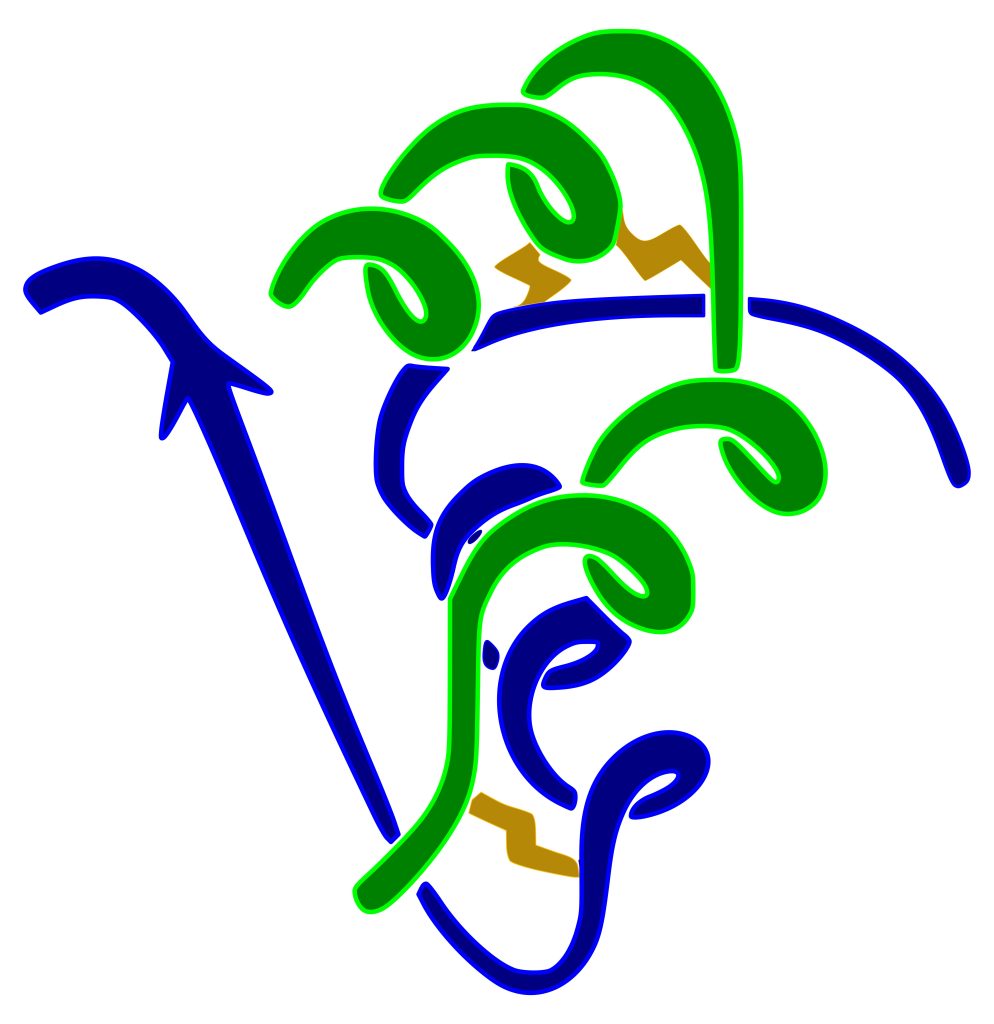
Hormones are molecules that are used to exchange information between different parts of the body. Insulin is produced in the pancreas, which measures the glucose levels in blood and produces insulin when these levels are high and it needs to inform other organs to consume this glucose. Some diabetes patients cannot produce insulin, which leads to uncontrolled glucose levels in blood. After first being produced in Escherichia coli, due to better productivity in yeast, human insulin production was engineered in the baker’s yeast Saccharomyces cerevisiae and commercialized by Novo Nordisk in the early 2000s. Insulin is a protein-based hormone, which makes it a rather straightforward one to produce, compared to other more “complex” ones. In particular, insulin is formed by two protein chains bound together. To produce them in microorganisms, the genes containing the information of the chains are introduced separately in bacterial or yeast cells. These chains are then industrially produced by these microbes and secreted to the exterior of the cell, from which they are recovered. The two chains are then combined and insulin is formed by a chemical reaction.
Steroids and sexual hormones
Not all hormones are as easy to produce as insulin. Some of them require the combined action of different proteins or enzymes to build a complex molecule. For example, the human sexual hormones are derived from cholesterol, which is already a fairly complex molecule. Progesterone is the most similar hormone to cholesterol, only two chemical modifications away, plays important roles in pregnancy, menstruation and embryo formation, and it is used in assisted reproductive techniques. In 1998, Catherine Duport, Denis Pompon and their team in Strasbourg were the first ones to produce progesterone in yeast. To do this, they introduced four genes to produce progesterone from cholesterol. But this was not enough because yeast does not produce cholesterol but a similar molecule called ergosterol. To produce cholesterol they introduced a gene from the plant Arabidopsis thaliana as well as removing the yeast gene responsible for the last step in the synthesis of ergosterol. By combining all this modifications, they created a mutant of baker’s yeast able to produce progesterone out of sugar.
Vaccine production
Hepatitis B
Vaccines act by presenting a dead pathogen or a part of it to the immune system, so that it can learn to recognize the pathogen and attack the real one once it reaches the body. The first vaccine produced through genetic engineering (AKA recombinant DNA technology) was Recombivax-HB, a hepatitis B vaccine produced in Saccharomyces cerevisiae and patented by researchers at the university of California in 1986. Another approved vaccine produced in yeast is the one for the human papilloma virus (HPV). To produce these proteins, a gene with the information for the synthesis of a protein of these viruses is introduced in yeast. The yeast reads the genetic information of this gene and starts producing the protein. Later, this protein is purified and combined with other ingredients (called adjuvants) to produce the final vaccine. These adjuvants are required to stabilize the protein from the virus and to make it accessible to the immune system.
Whole yeast vaccines
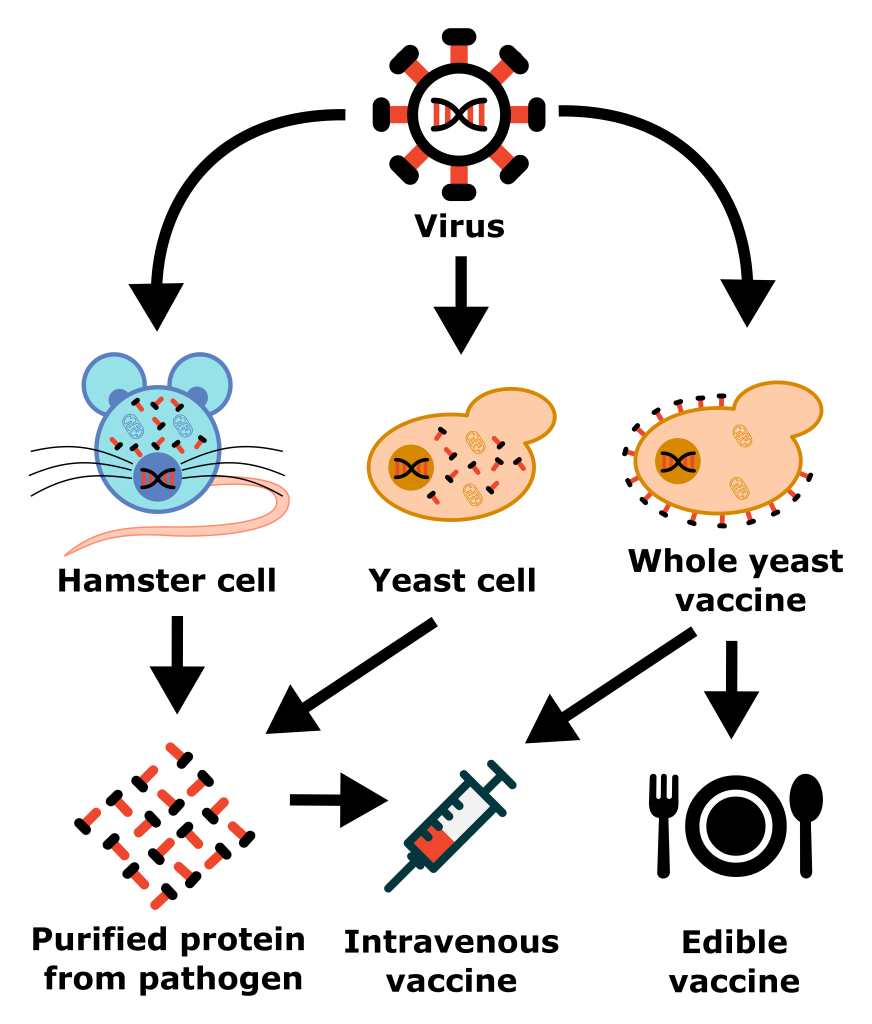
The history of yeasts and vaccines does not necessarily end with yeasts producing the proteins from a pathogen. There is ongoing research based on the idea that the yeast itself can be all that is needed to have a functioning vaccine. This whole yeast vaccine would still produce a protein from the virus or pathogen, but instead of releasing it for later purification, the yeast will link it on its surface. While linked to the yeast, the protein is stable which removes the need for the stabilizing adjuvants. Furthermore, these whole yeast vaccines could be administered like normal vaccines through the blood because the yeasts are not pathogenic and do not have components that lead to life-threatening immune reactions. Not only that, there are proposals about using these whole yeast vaccines as oral vaccines for humans and animals, with the yeast surviving all the way to the intestines where it could present the pathogen-derived protein to the immune system components found in the guts.
Antibody production
Antibodies are proteins found in animals that recognize and bind other molecules, normally certain regions of pathogenic proteins. These proteins are very important for the immune system and they are currently used as part of immunotherapies, in which antibodies are produced to bind viruses or cancerous cells, helping the immune system to fight them. The production of antibodies is an example of how sometimes the mechanisms for their production must be similar to the ones in humans, and indeed they are normally produced using mammalian cells, but as said before this is expensive. Besides their protein backbone, the antibodies also contain certain sugars bound to this backbone. The specific sugars attached are important for how the antibodies interact with other components of the immune system. Therefore, the antibody-production host to be used must be able to add a similar set of sugars. This rules out using bacteria, because their protein production machinery is too simple and cannot link sugars to the protein backbone. The baker’s yeast Saccharomyces cerevisiae is able to add sugars, but it adds mainly a specific sugar called mannose that is not present in the human antibodies. There are two ways to fix this. One of them is to engineer the baker’s yeast so that it does not link mannose to the antibodies, which is called “humanizing” the yeast production system. Another one is to use another yeast that links similar sugars to humans. One of these yeasts is the shepherd’s yeast (AKA Pichia pastoris AKA Komagataella phaffii), which not only does not link mannose to the antibodies, but is able to produce and secrete proteins in a much more efficient way than the baker’s yeast. The superiority of the shepherd’s yeast versus the baker’s yeast when producing antibodies for human use is a clear example of a situation in which the biodiversity of yeasts can provide a ready-made solution to a biotechnological problem.
Conclusion
At the time of writing this article, it has been less than 50 years since the production of the Hepatitis B vaccine with yeast was approved for human use. Since then, a wide range of therapeutical compounds have been produced using yeast. Besides the ones described previously, there are other ones such as hemoglobin to generate synthetic blood for transfusions, or the production of artemisinic acid by the group of Jay D. Keasling in 2006, a precursor of artemisin which is a drug against malaria obtained from plants. Time will tell which new therapeutic products will be produced by yeast in the following 50 years, with the hope that yeasts will make not only contributions to healthcare, but also on their affordability.
Sources
- Review article on yeast as producer of biopharmaceuticals
- Patent review (Part 1 and Part 2) of biomedical applications for yeast
- Review on whole yeast vaccines
- Article on production of prognenolone and progesterone in yeast
- Review on biotechnological applications of yeast
- Review on biopharmaceuticals approved before 2006
 English
 Spanish