
Ancient Egypt is a culture that has always fascinated modern society and has filled our heads with imagery of pyramids, sphinxes, temples, and mummies. The Giza pyramids are a reminder of past civilizations that built wonders and few archaeological discoveries are as famous as the Rosetta Stone or the tomb of Tutankhamun.
Similarly to their Mesopotamian neighbours, Egyptians used yeast to make bread and alcoholic drinks from the start of their written records. Wine was made from different fruits, such as dates, pomegranates and grapes, and beer was made from barley and emmer wheat. The rich literature and art of Egypt contains many references to these drinks and the role they played in society. While they provide a lot of information on brewing processes, new archaeological studies have revealed more details about how these drinks were made.
Alcohol in Egyptian mythology
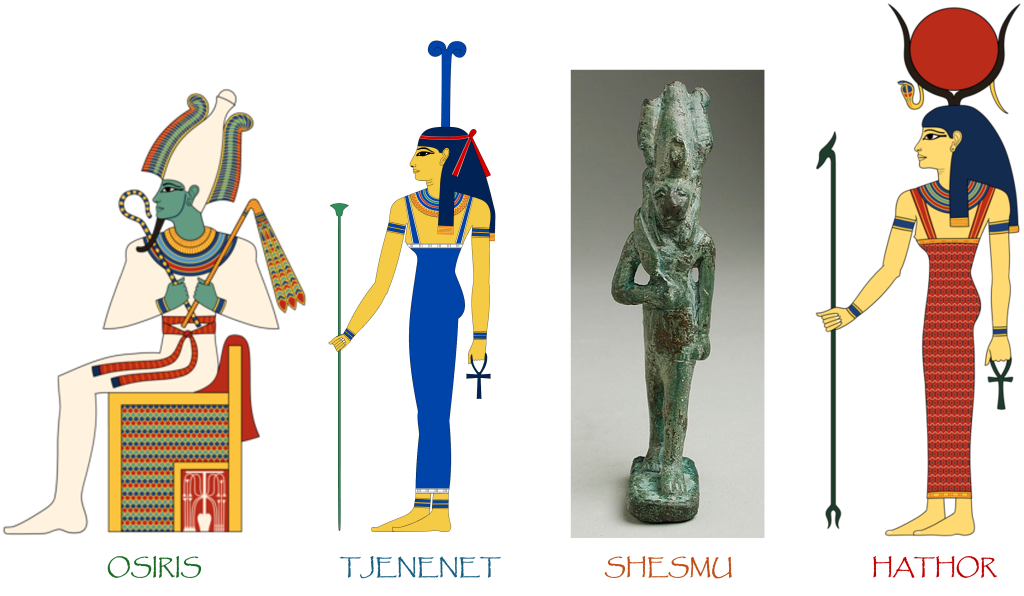
Religious texts are one source that highlights the importance of fermentation in Ancient Egypt. Several gods have been associated with alcoholic drinks due to different reasons:
- Osiris was considered the god who created beer and thought humans how to make it. According to Greek author Diodorus, he was also the first to drink wine and the one who taught humans how to grow grapevines, but this might have been a way to link him to Dionysus. The association between Osiris and beer and wine is nevertheless a real one due to the role of Osiris in agriculture. As the god of Death and Rebirth, he was credited to be behind the annual Nile floods that revitalized the fertility of Egyptian soil. This connection to fertility and vegetation is why Osiris is depicted as having green skin.
- Tjenenet was a goddess that has been wrongly linked to brewing and beer, because her name is similar to “tenemu”, as beer was known in Ancient Egypt. She was actually a mother and birth goddess, which is why she is depicted with a cow’s uterus on her head.
- Shesmu was a god of perfumes, linked to the press used to obtain essential oils. This association to the press seems to also have linked him to wine production, where pressing the grapes produced red wine. Shesmu also had a role in the underworld, where he served a as a slaughterer of gods for ritualistic purposes. Egyptians used wine to represent blood on religious offerings, so it is likely that this representation was also embedded in Shesmu. This god was not usually represented, but one of the most common representations is that of a lion-headed god holding one or two knives.
- By far, the most important goddess associated to fermentation is Hathor, which sometimes called “Lady of drunkenness”, but is generally associated to love, dance and music. The most famous myth involving Hathor is the “Destruction of Mankind”, a tale found in the “Book of the Heavenly Cow”. The Heavenly Cow refers to Hathor since she is usually depicted with cow horns or cow ears. According to the myth, at the beginning of the human era, when the sun god Ra was still in power, humans could not die and since their number kept on growing, they decided to start a rebellion to take over the gods. Upon hearing the news, Ra sent Hathor to deliver death to humans under the terrible form of the lion-headed goddess Sekhmet. She did her job very well, but her thirst for blood made her continue beyond her duties. Alarmed at the prospect of all the humanity being eradicated, Ra devised a plan. He asked his servants to prepare 7000 vats of beer and add a red dye and place it in the next town that Sekhmet was going to visit. When Sekhmet arrived, she mistook the red beer for blood so she went directly to drink all she could. The intoxication caused by the alcohol made Sekhmet fall asleep, which allowed her to come back to the loving form of Hathor and humanity was thus saved. Egyptians celebrated the return of the peaceful Hathor every year in a Festival of Drunkenness, in which people let go of every day social restrictions and gave in to the ecstasy to commune with the goddess. There is disagreement about what came first, the myth or the festival, as the myth might have been developed to justify the behaviour of the population.
Beer in Ancient Egypt
Since its origins, beer was the second most important drink (after water) in Ancient Egyptian society. The earliest Egyptian brewery dates back to 3500-3400 BCE which was used to produce 390 litres of beer per batch. This indicates that beer production had already scaled up beyond household settings. This brewery was found in Hierakonpolis, the capital of predynastic Egypt, where hundreds of years later Narmer would start the unification of Egypt. This is the first industrial brewery ever discovered and it stands in contrast to what is known about eh earlier beer production in Mesopotamia, which was done in small batches at home. The earliest written record dates to the 3rd Dynasty (2686-2613 BCE), in the offering list of an official called Khabawsokar, which included “sweet beer”.
Beer was a very popular drink, but it was mostly associated with the laypeople, being part of the salary for some workers. Therefore, there is not much written information about its production since it did not involve the higher classes, which were the ones able to leave texts describing their lives in their tombs. Nevertheless, the popularity of beer permeated society and appeared in common tales and ethical advice that were written much later. For example, fermentation froth appears as a bad omen in a “Tale of two brothers: Inpw and Bata”, and in the “Instructions of Duauf” a common man advices his son to be content after two beers.
Sadly the Egyptians did not leave behind anything similar to the Hymn to Ninkasi to show us how they made their beer. Initial proposals on the beer process came from the analysis of reliefs and figurines found in tombs that show laypeople working in the process of making beer and bread. This misled researchers to believe that beer in Ancient Egypt was made from partially cooked bread, a wrong idea that was supported by the use of bread in the preparation of bouza, an alcoholic beverage from native communities in Egypt.

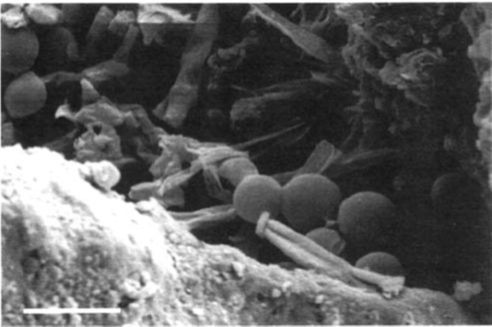
Dry conditions of Egypt have allowed the preservation of beer material in recipients that used to contain it. Using electron microscopy, it is possible to observe granules of starch and yeast cells. The presence of both, next to residues of grains, are good indicators that the material left was beer. By studying these remains it is now accepted that bread was not used in beer production, but what has been observed is that beer was obtained normally through a two-part malting process. The malting is the process by which grains are left or induced to germinate, which releases enzymes that will break down the starch into sugar molecules that can be used by the yeast to produce alcohol. According to the latest archaeological findings, ancient Egyptians would malt part of the grains, while the other ones were milled and slightly cooked to liberate more starch. The two batches of differently treated grain would be mixed, filtered, inoculated and then the fermentation would start. We do not know how the yeast was introduced in the mixture, and it has been claimed that the yeast might have come from the air, but it would be more plausible that they just added a bit of beer that was undergoing fermentation, beer sediment, or the froth produced during fermentation.
Wine in Ancient Egypt
Unlike beer, grape wine was reserved for the high classes of society. But grapes were not the only fruit used to make wine, as date wine, palm wine, or pomegranate wine were produced and were more available to popular classes. Although wine was not as prevalent as beer, and both were present in Egypt since the Predynastic Era, wine is referenced in texts earlier than beer. This makes sense considering the importance of grape wine for the nobility, which were the ones with resources to produce texts that have survived until our days. Grapevines were not widely cultivated in Egypt and most of the grape wine was imported, but at least pharaohs had personal vineyards. The fifth pharaoh of the 1st Dynasty, Den, called his vineyard “The enclosure of the Beverage of the body of Horus”.
Wine was produced similarly to the way it is done today. The first step was to extract the juice from the grapes. This was done in two ways, either crushing them with their feet or placing them in a piece of cloth and then twisting this cloth hard enough until all the grapes were crushed. Unlike beer and bread, yeast inoculation is not necessary for wine production, since baker’s yeast is found naturally on the skin of grapes. The juice of the grapes would be left in containers for the fermentation to happen. The Egyptians knew that wine could turn to vinegar if exposed to air long enough, so they would seal the jars after the wine had been produced. They also added plant resins, such as myrrh or terebinth for flavouring, but also because they prevented vinegar formation. These resins contain compounds that inhibit the growth of bacteria that feed on the alcohol to produce acetic acid, the acidic component of vinegar.
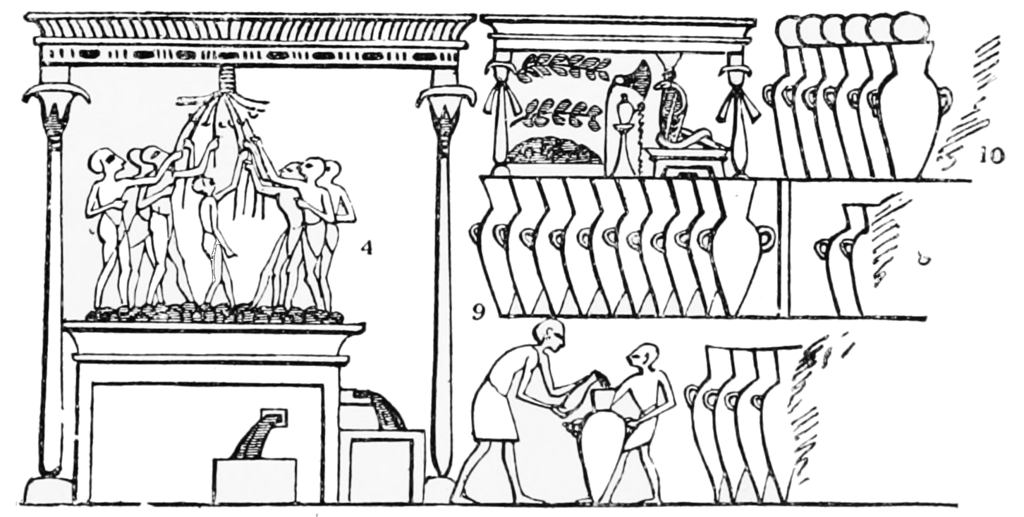
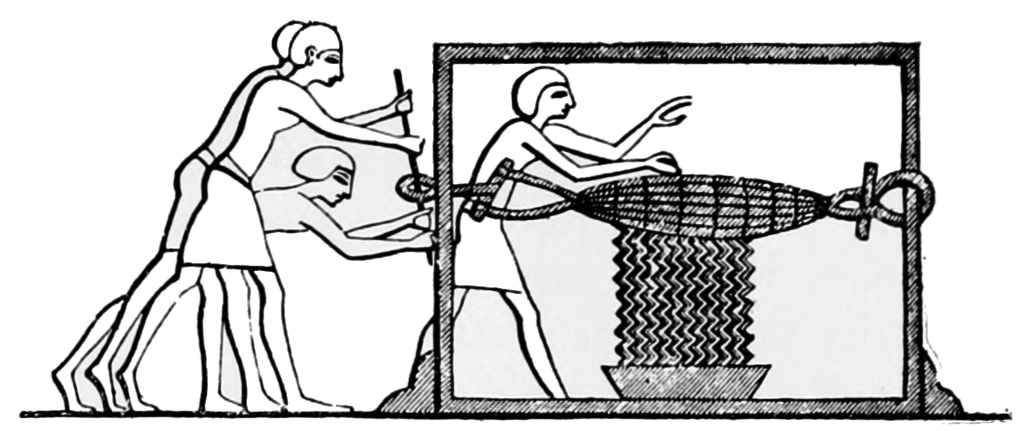
The oldest wine sample analysed in Egypt belongs to the one found in a jar at Abydos, in a tomb belonging to the king Scorpion I, from the Predynastic period. It contained a yellowish remain that was analysed and found to contain tartaric acid, a biomolecule associated to grapes. It was also found to contain DNA remains of baker’s yeast, as well as other molecules that indicated that this wine had contained herbs for flavouring purposes.

Did ancient Egyptians know about yeasts?
While reading for this article, I have noticed authors talking about ancient Egyptians knowing about yeasts. They most definitely did not know about the existence of unicellular fungi producing alcohol from sugar, but they seemed to have an understanding that something in the beer contained a principle that initiated beer production in other batches, and they most likely associated this principle to the sediment of beer.
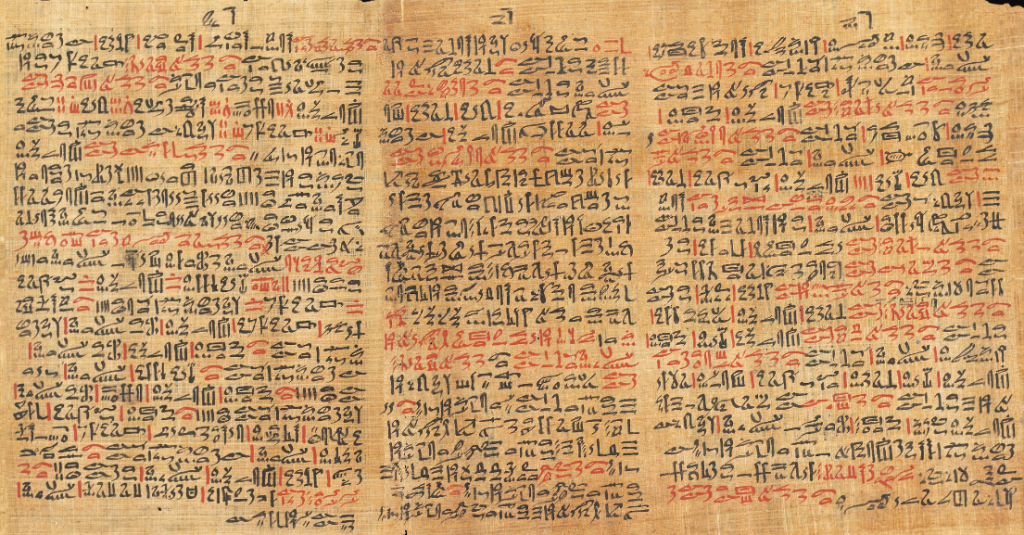
This can be observed in the Ebers Papyrus, the most complete pharmaceutical work from Ancient Egypt. Different types of beer from different origins are recommended as components in the remedies for different illnesses. Besides beer, some other recipes include the beer sediment specifically, hinting that they associated this with specific and different characteristics than the rest of the beer.
When comparing them to Mesopotamian society, also ancient producers of beer, one of the main differences is the role of the gods in the formation of beer. When comparing Ninkasi and Hathor, the first seemed to have a more direct role in the process of beer formation, granting it the power to make people drunk. On the other hand, Hathor seemed to be just associated to the experience itself of being drunk, or even just the emotions associated to it. Furthermore, nothing similar to the Hymn of Ninkasi has been found in Ancient Egypt, which might mean that the beer production in Ancient Egypt was less ritualized. Anyway, these two cultures existed for thousands of years and their ideas of the nature of alcohol production might have changed with time.
However, at least we can claim that Egyptians seemed to consider alcohol production a natural phenomenon that was in their power and not in the power of the gods. A clear clue for this is the Golenischeff Mathematical Papyrus (written around 1850 BCE), which has problems on how much beer can be made from a given amount of grain, and seem to indicate that the Egyptian brewers had a level of control on the amount of alcohol produced.
Conclusion written by AI
The story of yeasts, beer, and wine in Ancient Egypt is a testament to the ingenuity and sophistication of one of history’s most remarkable civilizations. From the mythological tales of gods like Osiris and Hathor to the practical innovations in brewing and winemaking, alcohol was deeply woven into the fabric of Egyptian life. It sustained workers, delighted the elite, and played a central role in religious rituals and festivals. Modern archaeology and science have allowed us to uncover the secrets of their fermentation techniques. While the ancient Egyptians may not have known about the microscopic yeasts that transformed their grains and grapes, they mastered the art of fermentation with a skill that continues to inspire awe. Today, as we raise a glass of beer or wine, we are, in a way, toasting to the enduring legacy of a culture that turned the simple act of brewing into a cornerstone of civilization.
Sources
- Book on Egyptian food: Food: Gift Of Osiris Vol.2
- Article on Egyptian beer, wine and milk: Mona M. Raafat El-Sayed and Mahinor A. Fouad (2018) Egyptian Beverages: A journey through Ancient to Modern Times. International Academic Journal Faculty of Tourism and Hotel Management
- Article on the chemical analysis of the wine jar from Abydos: Patrick E. McGovern, Armen Mirzoian and Gretchen R. Hall (2008) Ancient Egyptian herbal wines. PNAS
- Book chapter on brewing process in Ancient Egypt: Delwen Samuel (1999) Brewing and baking in ancient Egyptian art. Chapter in Food in the Arts, Proceedings of the Oxford Symposium on Food and Cookery 1998
- Translation of the Ebers papyrus
- Link to authors concluding that Tjenenet is not a beer goddess.
 English
 Spanish