
Biofertilizers, biostimulants and biopesticides
The Green Revolution
Treating plants with yeasts might substitute unsustainable agricultural practices caused by the “Green Revolution”. To understand why this matters, it helps to look back: agriculture has appeared independently around the world at different times. There has been debate around why humans tended to develop agriculture systems, but nowadays is somewhat agreed that climate conditions pushed the development of agriculture. The first agricultural practices were adapted to the environment where humans lived, such as taking advantage of seasonal river floods. With time, humans started to modify the landscape to increase agricultural productivity, for example building canals or terraces.
The modification of the environment to support plant growth continued to develop throughout human history, and it reached a high point in the mid-20th century, with the so-called “Green Revolution”. The development of high-yield crop varieties joined the development of chemical fertilizers and pesticides, as well as other technologies.
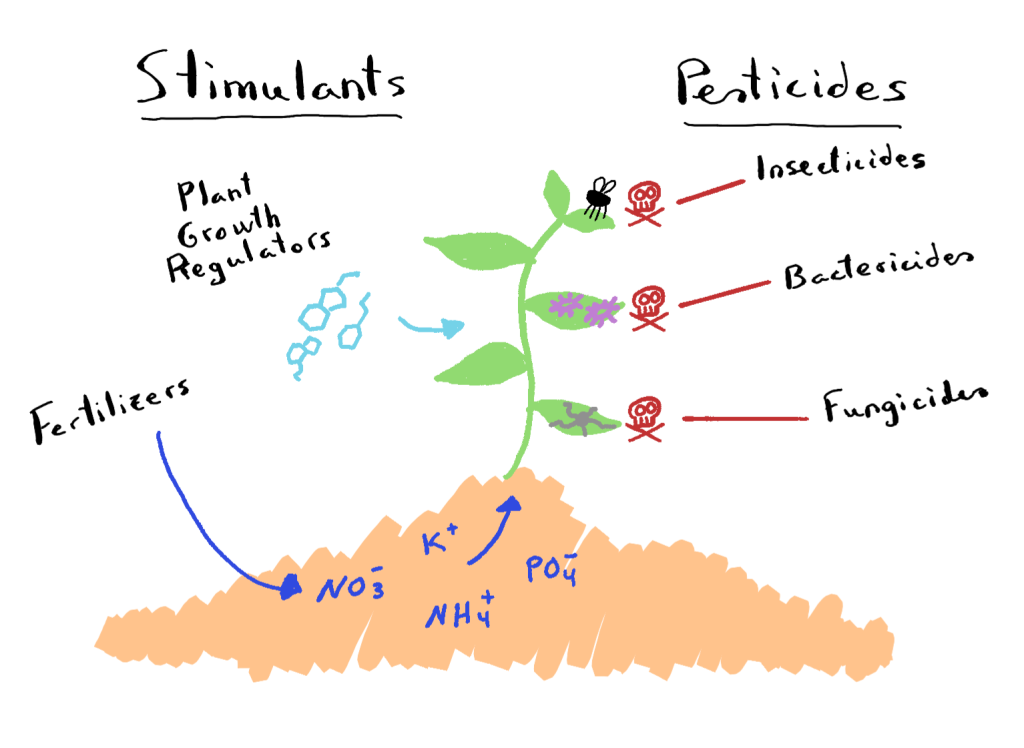
Fertilizers are products which contain nutrients for plants. Since the plants use air as their source for carbon, the fertilizers contain other elements that might not be as readily available for plants, such as nitrogen, phosphorus or potassium. Fertilizers are a type of plant stimulant. Stimulants that are not fertilizers can aid plant growth through other mechanisms, such as tolerance to environmental stress.
On the other hand, pesticides do not promote plant growth, but aim to protect the crops by defending them against predators, competitors and diseases. For example, insecticides are used to prevent plagues of locusts, antibiotics are used against bacterial diseases and fungicides are used to fight against pathogenic fungi.
The Evergreen Revolution
While the “Green Revolution” had a huge positive impact in terms of human nutrition, it came with a cost. Loss of biodiversity and soil contamination have had a negative impact in the resilience of agricultural systems and damages to the environment. Indian agricultural scientist M. S. Swaminathan has called for an “Evergreen Revolution”, one that builds on top of the “Green Revolution”, but taking into consideration ecological aspects to create a more sustainable agricultural system.
While this “Evergreen Revolution” has not been fully realized, efforts are being made to seek sustainable alternatives to practices from the “Green Revolution”. In particular, the microbial diversity of plants and soil has become a source of potential (bio-)substitutes for chemical fertilizers, stimulants and pesticides. While bacteria and filamentous fungi have attracted most of the attention, there are also research projects and commercialized products that use yeasts as biofertilizers, biostimulants and biopesticides.

Improving plant nutrition with yeasts
Some yeasts can support plant growth by increasing the amount of mineral nutrients available, acting then as biofertilizers. One of the most important nutrients for plants is nitrogen, since plants can only absorb it in the form of nitrate or ammonium. Unlike plants and like other fungi, yeasts can degrade organic matter and turn its nitrogen into ammonium, which can then be used by plants. However, most of the nitrogen in the Earth is in the atmosphere, in the form of nitrogen gas or N2.
It has long been known that certain bacteria have the ability to turn the atmospheric N2 into nitrate, a process called nitrogen fixation and whose molecular mechanism has been determined. On the other hand, yeasts are not famously known by their nitrogen fixation abilities, and although they were first reported in 1969, this discovery did not attract much attention. While this ability of yeasts has not been explored, it seems that most yeasts associated with plants, either with their roots or leaves, are able to fix nitrogen in the form of ammonium. In a study of 2022, a group of Taiwanese researchers found that a 56% of root-associated yeasts and an 80% of leaf-associated yeasts could grow in the absence of nitrogen.
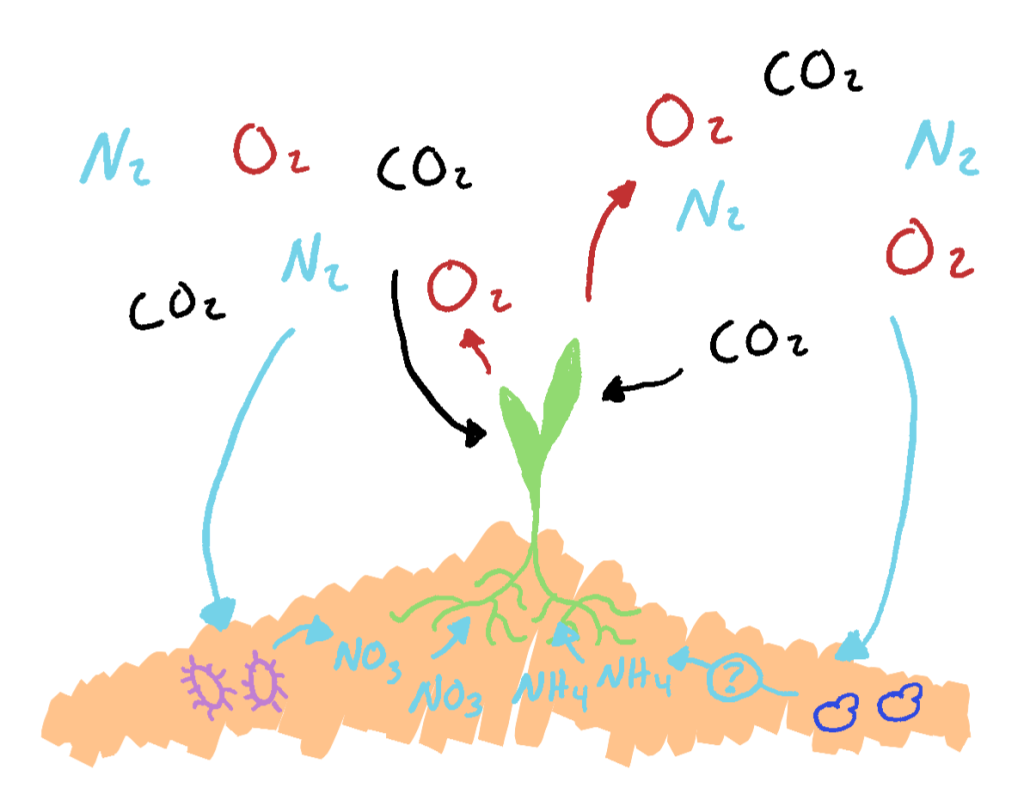
Although yeast nitrogen fixation seems to be widespread, the mechanism behind it seems to be very different than that of bacteria and it remains completely unknown. Furthermore, in the same study where nitrogen fixation was studied, it was observed that this activity did not correlate with promotion of plant growth, and while several yeasts were observed to promote it, it was not determined that this was specifically due to increased nitrogen levels. Therefore, a lot more research needs to be done on yeast nitrogen fixation, both for fundamental and applied reasons.
Enhancing plant growth with yeasts
Regulating plant stress
Besides the potential benefits of yeast nitrogen fixation, there are already known mechanisms by which yeasts can improve plant growth. In a study from 2011, a group of researchers in Australia studied the effects of a strain of the soil yeast Candida tropicalis in the growth of rice. Inoculating the soil with this yeast increased root growth by 16-35%.
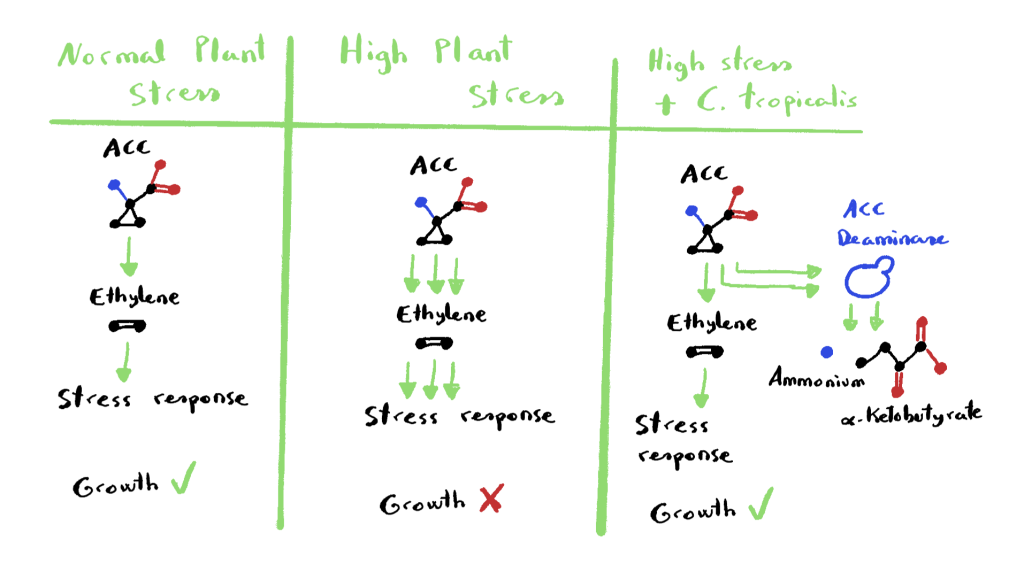
The researchers mentioned that the strain used had better properties that other strains of the same species, mainly a higher ACC (1-aminocyclopropane-1-carboxylate) deaminase activity. Through this enzyme yeasts can degrade ACC to obtain nitrogen for growth. ACC is important because it is a precursor of ethylene, a gas that is used as hormone in plants. Ethylene is produced in response to stress, but similar to humans, and excessive stress response is detrimental to the plant. Therefore, the presence of a yeast that can break down ACC helps modulate the amount of ethylene that the plant can produce, helping indirectly to its growth.
Producing plant hormones
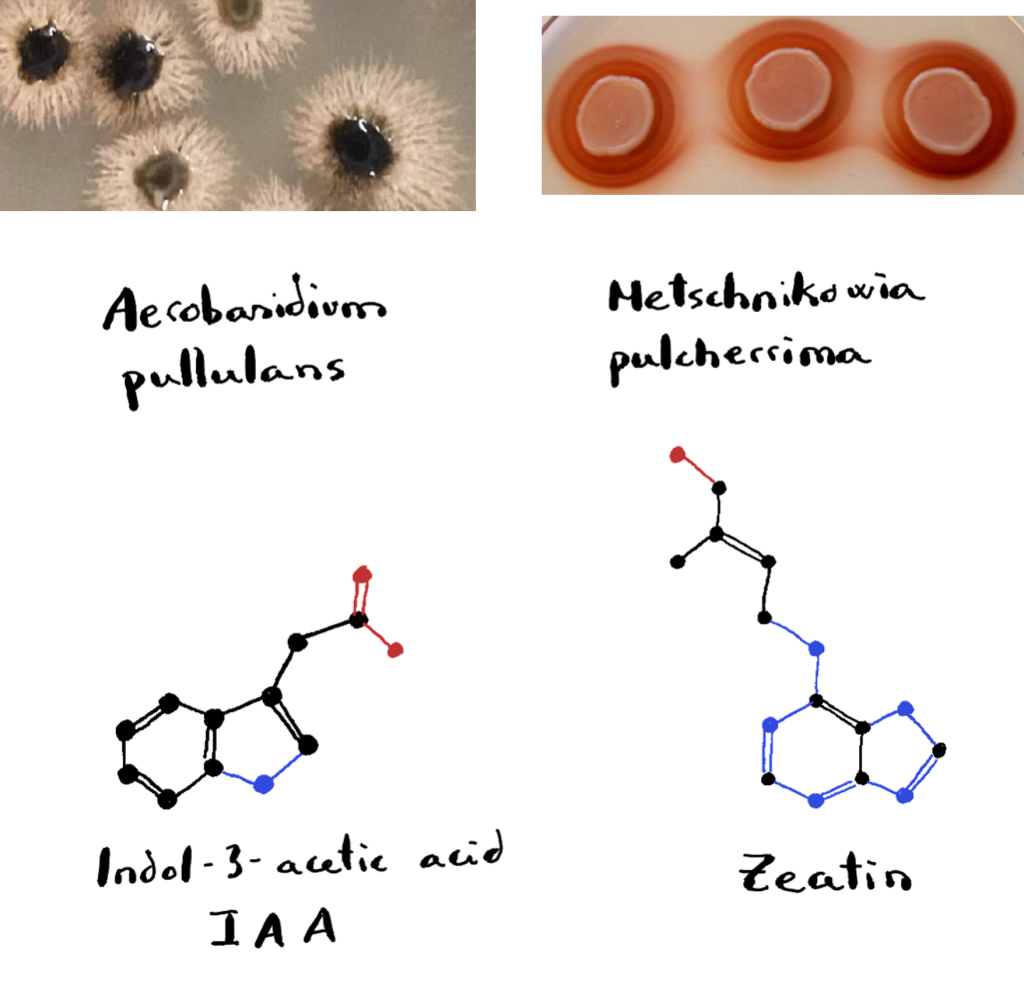
To support their idea that the ACC deaminase is driving plant growth, the authors ruled out another well-known plant growth promoting property, because it was lower in the strain they used. This property is the production of indole-3-acetic acid (IAA), a plant hormone from the auxin category that isa one of the main ones involved in controlling plant growth. While the strain used in the Australian studied was not very good at producing this hormone, a lot of other yeasts have been observed to produce it in levels high enough to have an impact on plant growth.
IAA production seems to be higher in yeasts associated in plants, including those living inside the plants (endophytic yeasts). In a Russian study from 2022, 97 endophytic yeasts from different fruits around the world were evaluated in their capacity to produce IAA, and it was observed that 72% of them could produce it. The best producer was the yeast Aerobasidium pullulans, known for its black color, while the second best producer was Metschnikowia pulcherrima, another yeast used in agriculture. Another Russian study from 2018 showed that these two yeasts were also good producers of zeatin, another plant hormone from the cytokinin category, which also promotes plant growth.
Fighting plants diseases with yeasts
While yeasts have the potential in agriculture to promote plant growth, where they seem to be shining commercially is in the prevention of plant diseases. Different commercial products based on yeasts are available in the market for different diseases. Some yeasts seem particularly useful for a certain disease, while other yeasts provide protection against a wide range of pathogens.
Specific protection against Fire Blight
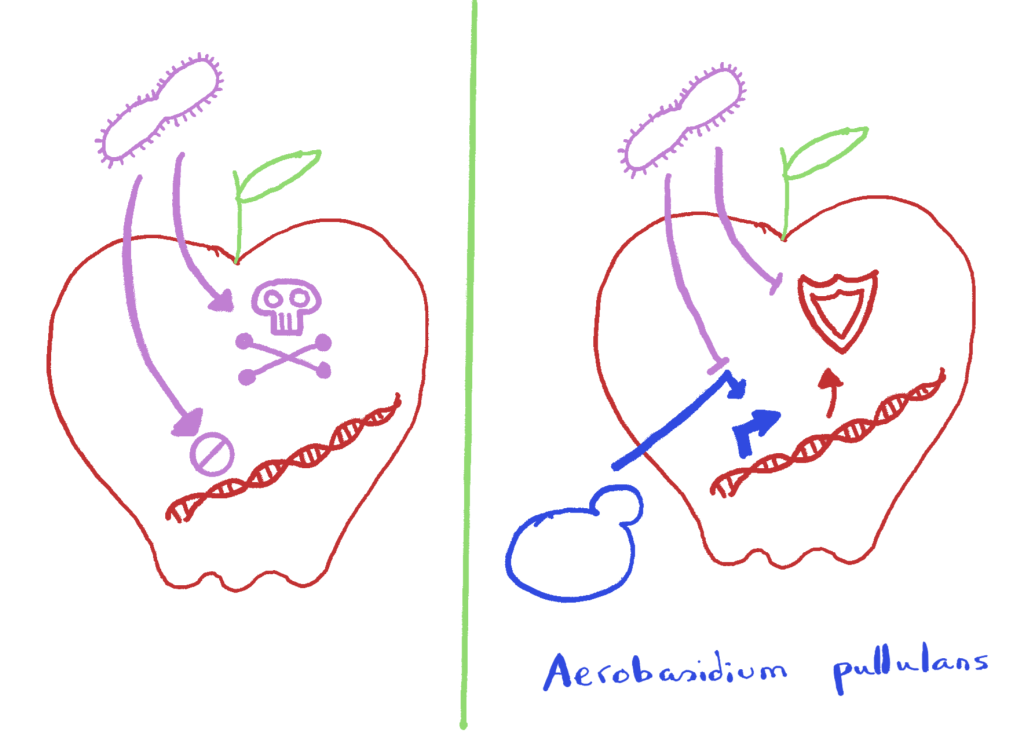
From the first category, A. pullulans has been observed to confer great protection against fire blight in apples and pears. This has led to this yeast being used in commercial products such as Boni ProtectTM and Blossom ProtectTM. Fire blight is caused by bacteria, which is why in the past antibiotics were used against this pathogen. The use of antibiotics in agriculture is nowadays strongly restricted to prevent the generation of antibiotic-resistant pathogens.
A. pullulans has proved to be a suitable alternative to antibiotics, with an activity against fire blight similar to that of streptomycin. This property of A. pullulans has been exploited since the beginning of the 21st century, but only recently are the mechanisms of the protection being studied. At the beginning it was thought that A. pullulans acted by competing with fire blight bacteria for space in the plant, as observed in other biocontrol agents. However, it was later observed that A. pullulans colonized a different part of the plant, and this yeast did not lower the number of the pathogenic bacteria.
Based on the latest studies, A. pullulans seems to be interacting with the plant to induce the expression of pathogenicity-related genes. These genes are normally suppressed by the fire blight bacteria to attack the plant. Therefore, the battle between A. pullulans and the fire blight bacteria does not seem to be a physical one, but one that takes place in the genes of the plant.
General fungicide activity
Unlike the specific activity of A. pullulans against fire blight, other yeasts are able to provide protection against a wide range of pathogens. M. pulcherrima is one of the yeasts that most promise has shown in this area. This yeast has shown protection of fruits such as apples and grapes against different fungi, including Alternaria, Penicillium or Aspergillus.
M. pulcherrima and related yeasts are characterized by the production of a dark-red pigment called pulcherrimin. This pigment is formed through the interaction of pulcherrminic acid secreted by the yeast and iron present in the environment, which gives place to an insoluble compound. It has been suggested that the great activity of this yeast against different pathogens rely on the production of pulcherrimin, which makes iron unavailable to other microorganisms.
However, strains of this yeast lacking pulcherrimin production also show fungicidal activity. Other mechanisms by which M. pulcherrima can act against fungi are competition for nutrients or secretion of enzymes that attack the cell wall of other fungi. It has also observed that M. pulcherrima can inhibit the growth of the pathogenic fungi Botrytis through a distance effect, by just growing in solid media nearby. This has been explained by the ability of M. pulcherrima to produce ethyl acetate, a volatile compound that also has antimicrobial properties. It is possible that the combination of all these mechanisms is what makes M. pulcherrima such a useful tool against fungal diseases.
Conclusion written by AI
Yeasts are emerging as valuable allies in the search for more sustainable agricultural practices. While their role as biofertilizers through nitrogen fixation remains poorly understood, their ability to modulate plant stress, produce growth-promoting hormones, and act as powerful biocontrol agents highlights their broad potential. Species such as Aureobasidium pullulans and Metschnikowia pulcherrima already demonstrate how yeasts can successfully substitute or complement chemical pesticides, offering effective and environmentally friendly solutions. As agriculture moves toward the vision of an “Evergreen Revolution”, yeasts provide an underexplored but promising resource to reduce chemical inputs, enhance crop resilience, and build healthier agroecosystems. Continued research into their mechanisms and applications will be key to fully unlocking their contribution to the future of sustainable food production.
Sources
- Review on the different applications of yeasts in agriculture: Hernández-Fernández, M.; Cordero-Bueso, G.; Ruiz-Muñoz, M.; Cantoral, J.M. Culturable Yeasts as Biofertilizers and Biopesticides for a Sustainable Agriculture: A Comprehensive Review. Plants, 2021, 10, 822.
- Article on nitrogen fixation by yeasts: Rou-Yun Chen, Wei Jiang, Shih-Feng Fu, Jui-Yu Chou, Screening, evaluation, and selection of yeasts with high ammonia production ability under nitrogen free condition from the cherry tomato (Lycopersicon esculentum var. cerasiforme) rhizosphere as a potential bio-fertilizer, Rhizosphere, Volume 23, 2022, 100580.
- Article on Candida tropicalis and ACC deaminase: Khanok-on Amprayn, Michael T. Rose, Mihály Kecskés, Lily Pereg, Hien Thanh Nguyen, Ivan R. Kennedy, Plant growth promoting characteristics of soil yeast (Candida tropicalis HY) and its effectiveness for promoting rice growth, Applied Soil Ecology, Volume 61, 2012, Pages 295-299
- Article on production of IAA by yeasts: Kachalkin, A.; Glushakova, A.; Streletskii, R. Diversity of Endophytic Yeasts from Agricultural Fruits Positive for Phytohormone IAA Production. BioTech 2022, 11, 38. https://doi.org/10.3390/biotech11030038
- Article on production of zeatin by yeasts: Streletskii RA, Kachalkin AV, Glushakova AM, Yurkov AM, Demin VV. 2019. Yeasts producing zeatin. PeerJ 7:e6474
- Article on genome mining of Aerobasidium pullulans: Xiao, D., Driller, M., Stein, K. et al. Genome mining the black-yeast Aureobasidium pullulans NRRL 62031 for biotechnological traits. BMC Genomics 26, 244 (2025).
- Article on the mechanism of action of Aerobasidium pullulans against fire blight: Kunz, S., Zeng, Q. & Johnson, K.B. History, efficacy, orchard ecology, and mode of action of Aureobasidium pullulans, the microbial agent in Blossom Protect, for suppression of fire blight of pome fruit. J Plant Pathol 106, 871–881 (2024)
- Review on Metschnikowia pulcherrima and related yeasts producing pulcherrimin: Sipiczki, M. Metschnikowia pulcherrima and Related Pulcherrimin-Producing Yeasts: Fuzzy Species Boundaries and Complex Antimicrobial Antagonism. Microorganisms 2020, 8, 1029.
 English
 Spanish