
Many cultures have produced alcoholic drinks across regions, climates, and epochs. It is beyond doubt that alcohol production has appeared independently in different places around the world. However, the question remains about the first culture that used fermentation to produce alcoholic drinks. This question may never be solved, and it might not even make sense to ask it, but the search for an answer has taught us much about fermentation in prehistory and its relation to society and agriculture. In this article, we explore prehistoric alcohol brewing, starting from the Neolithic and going backwards.
Alcohol fermentation in the Neolithic
Alcoholic drinks can be obtained from multiple sources, which give rise to the different drinks we know of today. Beers are made from grains such as wheat, barley, or rice; wine and cider are made from fruits; mead is made from honey; and kumis is made from milk. However, for a long time, researchers have looked at beer as the primordial drink, since it has been assumed that alcohol brewing started with agriculture, and agriculture started with grains.
The theory behind this assumption is based on both surplus and sedentarism. Beer brewing requires the storage, processing, and fermentation of fairly large amounts of grain. This would have required a certain level of sedentarism. Most importantly, it was thought that alcohol production was invented as a result of spoiled stored grains. This storage would have been the result of surplus from agricultural practices.
For quite some time, archaeological evidence has seemed to support this theory. The development of agriculture marks the birth of the Neolithic, as opposed to the Paleolithic, which was dominated by hunter-gatherers. Over the years, and thanks to the evolution of chemical analysis, archaeological remains of alcohol have been identified further and further back in time, but all of them linked to agricultural settlements.
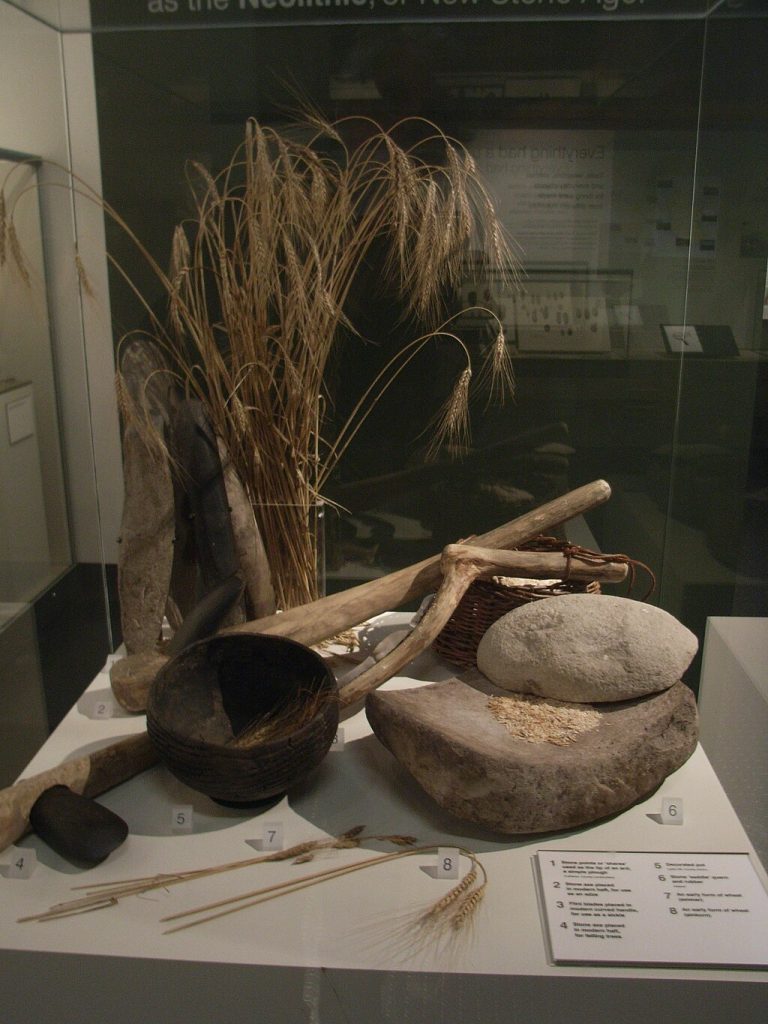
One of the oldest pieces of evidence from alcohol production comes from Jiahu in China. In this Neolithic village dating back to 7000 BCE, vessels were discovered to have contained fermented beverages made of a mix of rice, fruits, and honey. This drink defies our current classification of alcoholic drinks. In fact, as Christian Berger argues in his blog, it is most likely that the primordial alcoholic beverages were not beer, nor wine, nor mead. The appearance of specialized drinks would have come with time, as individuals in early societies became more specialized in certain activities.
The earliest evidence for specialized alcoholic drinks comes from Godin Tepe, an archaeological site in Iran. On this site, different vessels dating back to 3100–2900 BCE were analyzed. Some of them had reddish remains, and chemical analysis strongly suggested that they were wine remains. Another type of vessel, with a different shape and characteristics, was found to contain a yellow residue, whose chemical analysis suggests that it could be a beer residue. Therefore, by the beginning of the 3rd millennium BCE, specialized wine and beer production and their separate storage in different vessels were already taking place.
Evidence for fermentation before agriculture: Natufians
Although some accepted that brewing began in the Neolithic after agriculture, not everyone was convinced. Too much evidence was mounting that agriculture was not necessary for brewing, such as ethnographic accounts of complex hunter-gatherer cultures producing alcohol, or genetic studies supporting something similar to the “Drunken Monkey Hypothesis”. This led to the search for alcohol brewing in pre-Neolithic settlements.
One of the principal suspects was the Natufians, discovered by Dorothy Garrod in 1928. This culture flourished in the East Mediterranean between 13000 and 9500 BCE. They are considered the predecessors of the first agricultural people in the area, and they already show certain characteristics that place them closer to the Neolithic than to the Paleolithic, such as sedentarism, the use of cereals to make unleavened bread, or domesticated dogs.
The cultural context of the Natufians contains all the necessary ingredients for the development of brewing technology. This idea was reinforced with the discovery of the Rafeqet cave, which contained both holes carved in the stone floor, as well as boulders with holes carved into them. These last ones could have been used as mortars to process grains, as well as vessels to hold liquids, boil them, or let them ferment.
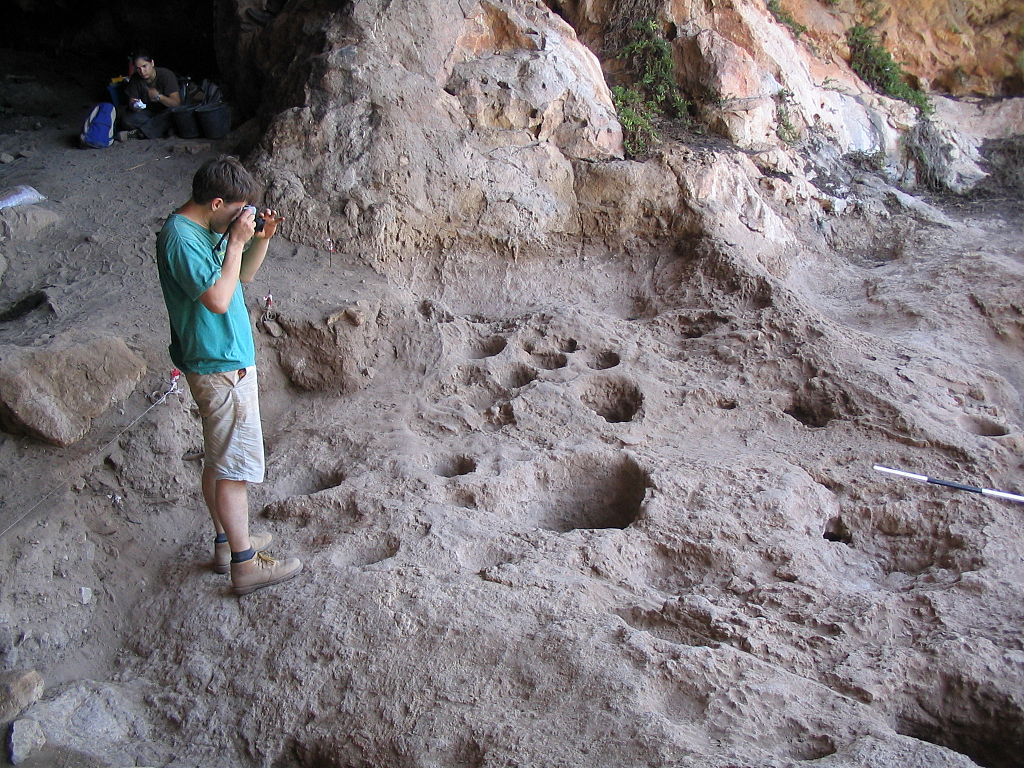

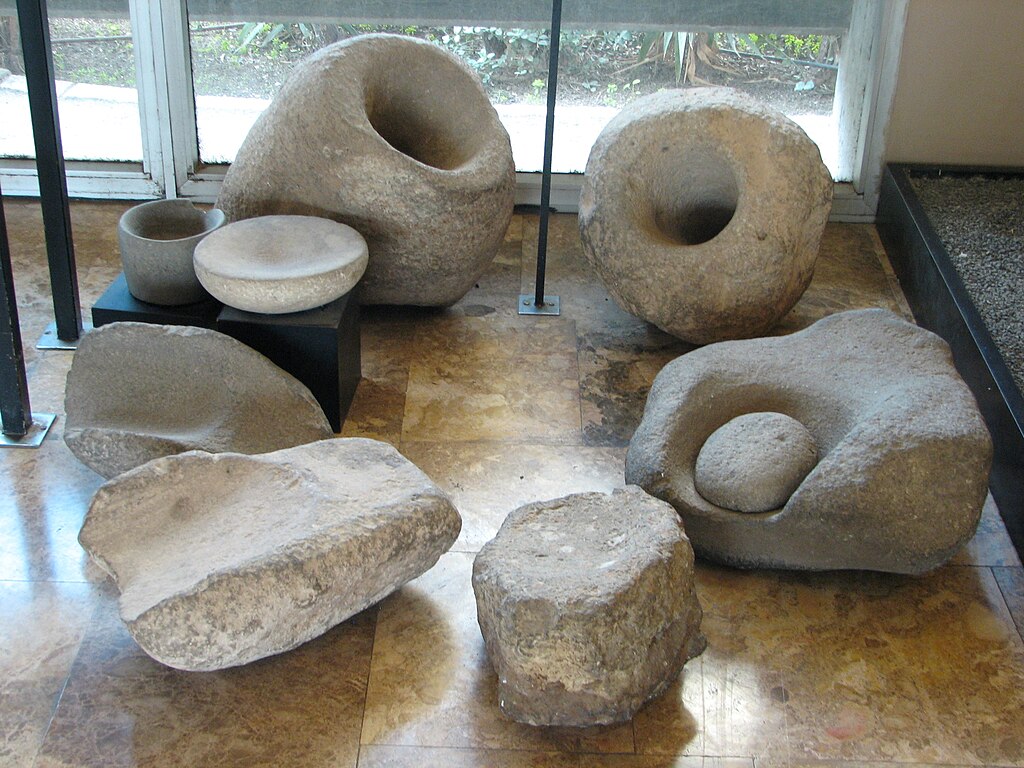
Alcohol production in the Natufian culture has gained more credibility after a 2018 study that analyzed starch granules found in the mortars and holes of Rafeqet cave. Using microscopy, the researchers were able to identify shapes in the starch that are associated both with malting and fermentation.
Moreover, the Rafeqet cave shows signs of elaborate burial rituals, which may have been celebrated with feasts involving bread, alcohol, and other high-value foods. The relationship between burials, rituals, and alcohol has been observed in other prehistoric cultures. The earliest evidence of beer-like drinks in Europe is found in modern-day Spain, dating back to the 5th millennium BCE, and was found in a cave and a dolmen, both associated with burials.
While all other archaeological evidence for alcohol brewing dates from Neolithic societies, the discovery in the Natufian cave shows that alcohol brewing was possible before the development of agriculture. The Rafeqet cave has reignited a debate that started in the 50s: whether alcohol brewing with grains was not a result, but a cause of the development of agriculture.
Fermentation before the Natufians
Although the oldest evidence of alcohol brewing might come from the Natufians, that does not mean that they were the first culture to develop this technique. The study of starch granules has not been widely used in archeological sites across the world, and the development of new analytical techniques might discover even older alcohol remains someday.
Something that is interesting about the Natufians is that although they show many characteristics of Neolithic societies, they still had not developed pottery, a technology that shares a close connection with brewing. In fact, other cultures around the world had already developed this technology. The earliest piece of a ceramic vessel, which was found in the Xianren Cave in China, dates back to 18000 BCE, around 5000 years before the Natufians.


Also, it is important to note that fermentation technology not only applies to alcohol brewing butcould also be used to process and preserve different kinds of food. For example, the Jomon culture in Japan started producing ceramic vessels back in 14000 BCE, whose analysis indicates that they were mainly used for storing and processing fish, which most likely would have taken place through fermentation. As the Natufians have shown, pottery is not necessary for fermentation, and evidence of fish fermentation is also observed in “gutter” pits from Scandinavia dating back to around 7200 BCE.
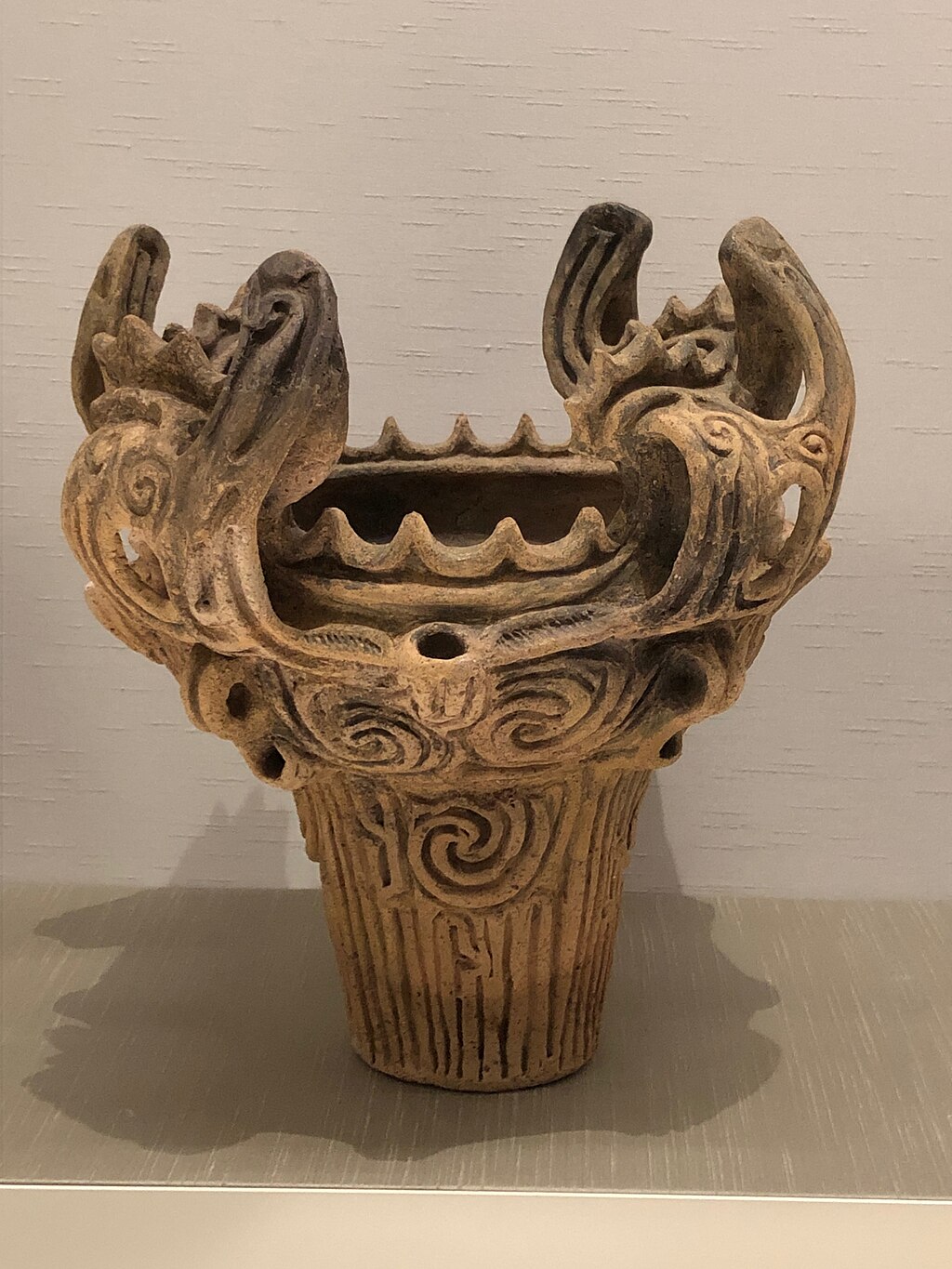
It is clear that the Natufians might not have been the first culture to produce alcohol, but the further back in time we go, the more technically challenging it becomes to identify alcohol remains with current archaeological methods. We might have to look at other types of evidence to find answers about the first alcoholic brewing. The study of genes related to alcohol consumption and the comparison of our anatomy with that of other primates offers interesting clues, and it suggests that fermentation is much more ancient than the Neolithic, even more ancient than the Paleolithic, and even older than humanity’s control of fire. What’s more, fermentation might have been essential for the evolution of our species.
Conclusion written by AI
The search for the first alcoholic drink reveals not just a story of brewing, but a window into the origins of human culture itself. From the Natufians’ early rituals to the Neolithic villagers of Jiahu, and from fermented fish in Japan to genetic clues deep in our biology, evidence suggests that fermentation long predates agriculture and may even have shaped it.
Alcohol was never merely a byproduct of surplus grain but a force that brought communities together, fuelled ritual and social bonds, and perhaps even influenced the trajectory of human evolution. Far from being a simple invention of settled farmers, fermentation appears as an ancient companion of our species, woven into the very fabric of what it means to be human.
The story of alcohol in prehistory is also a story of invisible partners: the yeasts and microorganisms that made fermentation possible long before humans understood the process. Outside East Asia, early brewers did not work with the familiar baker’s yeast but rather relied on wild strains living on grains, fruits, and in the environment. These diverse microbial communities would have produced unpredictable and varied drinks, sometimes sour, sometimes sweet, each batch shaped by local conditions.
Far from being a controlled science, the first fermentations were likely accidental encounters between stored foods and opportunistic microbes, later ritualized and refined into social practices. Recognizing the role of these early microbial allies reminds us that alcohol was not simply a human invention, but the product of an ancient symbiosis between people and the microscopic life that surrounded them.
Sources
- Article on the prehistoric origins of alcoholic fermentation: Guerra-Doce, E. The Origins of Inebriation: Archaeological Evidence of the Consumption of Fermented Beverages and Drugs in Prehistoric Eurasia. J Archaeol Method Theory 22, 751–782 (2015).
- Article on alcoholic evidence at Jiahu archaeological site: P.E. McGovern, J. Zhang, J. Tang, Z. Zhang, G.R. Hall, R.A. Moreau, A. Nuñez, E.D. Butrym, M.P. Richards, C. Wang, G. Cheng, Z. Zhao, & C. Wang, Fermented beverages of pre- and proto-historic China, Proc. Natl. Acad. Sci. U.S.A. 101 (51) 17593-17598, https://doi.org/10.1073/pnas.0407921102 (2004).
- Article describing the context of Natufians in relation to alcohol fermentation: Hayden, B., Canuel, N. & Shanse, J. What Was Brewing in the Natufian? An Archaeological Assessment of Brewing Technology in the Epipaleolithic. J Archaeol Method Theory 20, 102–150 (2013).
- Article about the analysis of starch granules in Rafeqet cave: Li Liu, Jiajing Wang, Danny Rosenberg, Hao Zhao, György Lengyel, Dani Nadel, Fermented beverage and food storage in 13,000 y-old stone mortars at Raqefet Cave, Israel: Investigating Natufian ritual feasting, Journal of Archaeological Science: Reports, olume 21, 2018, Pages 783-793
- Article describing the role of pottery in early fermentation: Craig E. Oliver. Prehistoric Fermentation, Delayed-Return Economies, and the Adoption of Pottery Technology. Current Anthropology. 62, 24, S233-S241 (2021)
 English
 Spanish