
During the last years, it has become clear that East Asia is the place of origin for baker’s yeast. It may not be then a coincidence that one of the earliest records of alcohol production come from China, even if alcohol production has been developed in different parts of the world independently. Alcoholic beverages from China and other Asian countries are quite particular because most of them use mold as part of their brewing process. This practice can be traced back to the origin of alcohol fermentation, and although baker’s yeast traveled outside Asia, these molds remained a distinctive part of Asian culture.
Traditional Asian alcoholic drinks
One of the most famous alcoholic drinks from China is rice wine. The most famous example is mijiu, which is a clear drink made from glutinous rice and with a relatively high percentage of alcohol (15-20%). Mijiu is a type of “yellow wine” or huangjiu. Huangjiu refers to any alcoholic drink made by fermentation of grains, including rice, millet or sorghum. Another famous type of huangjiu is shaoxing wine, which is used often in Chinese recipes. Although the English names for these drinks are translated as “wine”, it would be better to consider them beers because the starting material for all of them is rice or other grains.
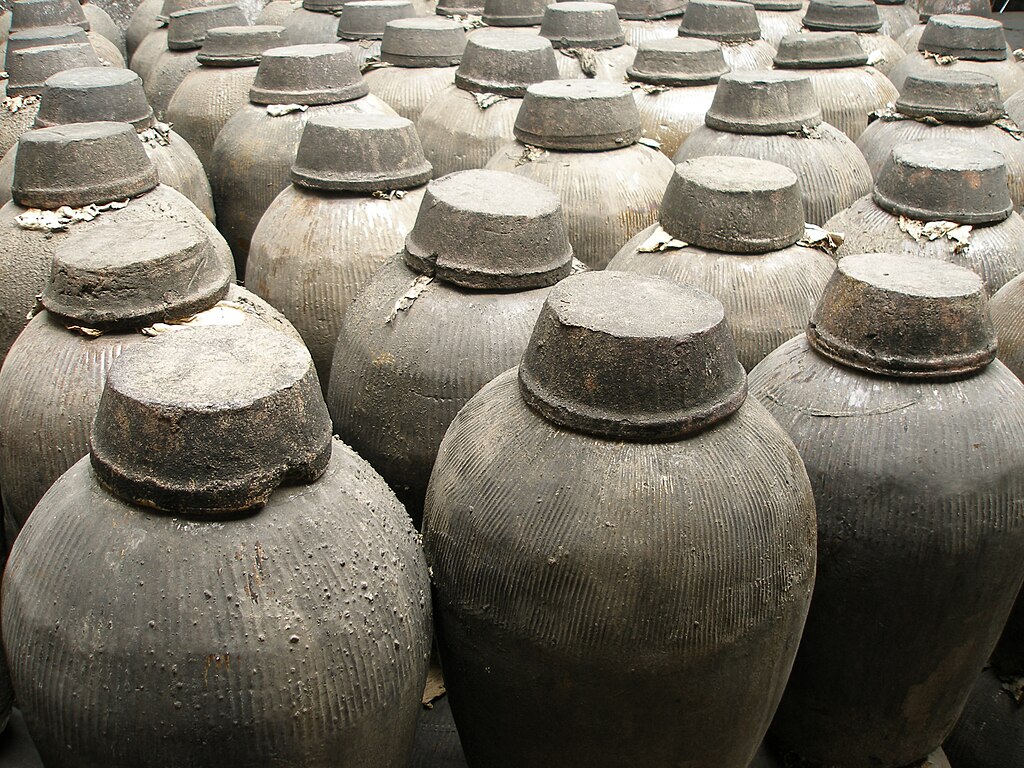
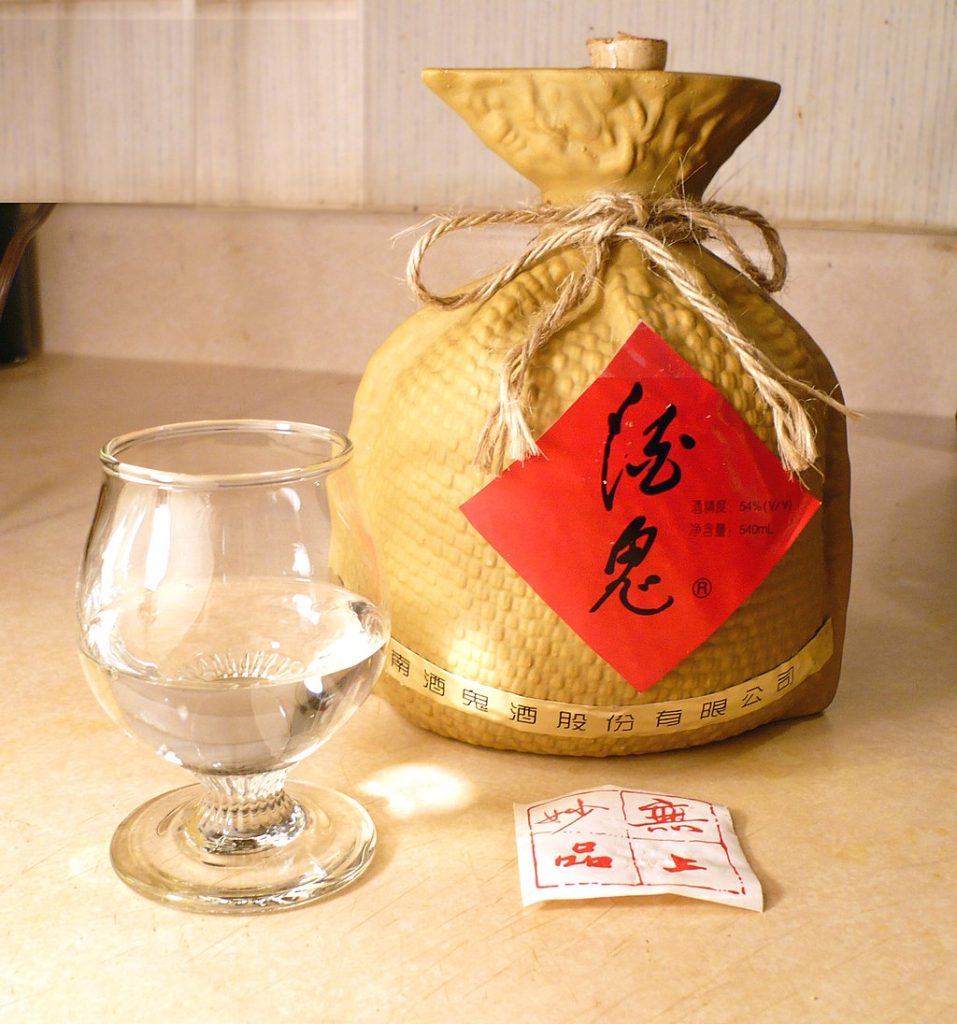
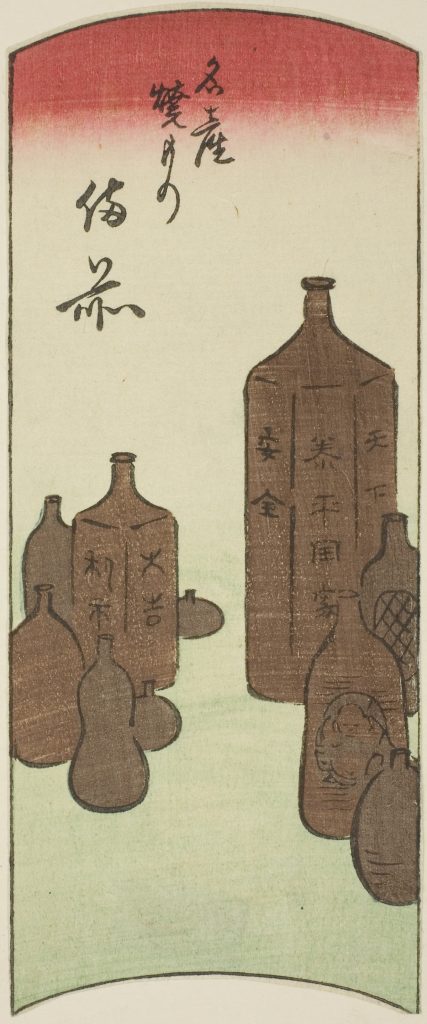
The different huangjiu drinks can be distilled to produce a drink with a more potent alcoholic content known as baijiu. The most common baijiu is produced from sorghum and, due to its popularity in China, it is the most consumed liquor in the world, selling more than all whiskey, vodka, gin, rum, and tequila combined. In other Asian countries there are similar drinks to huangjiu and baijiu. The famous Japanese sake is similar to huangjiu, as it is also the Korean cheongju. Baijiu on the other hand has its counterparts in the Japanese shochu and the Korean soju.
Common starting point: Qu or Koji
All these drinks have in common that the fermentation is initiated using a starter called qu in China and koji in Japan. This is normally a solid or semi-solid piece of rice or other grains in which fungi and bacteria have started growing. These microorganisms will have important roles in the release of sugars, their fermentation to alcohol and the production of flavors and aromas.
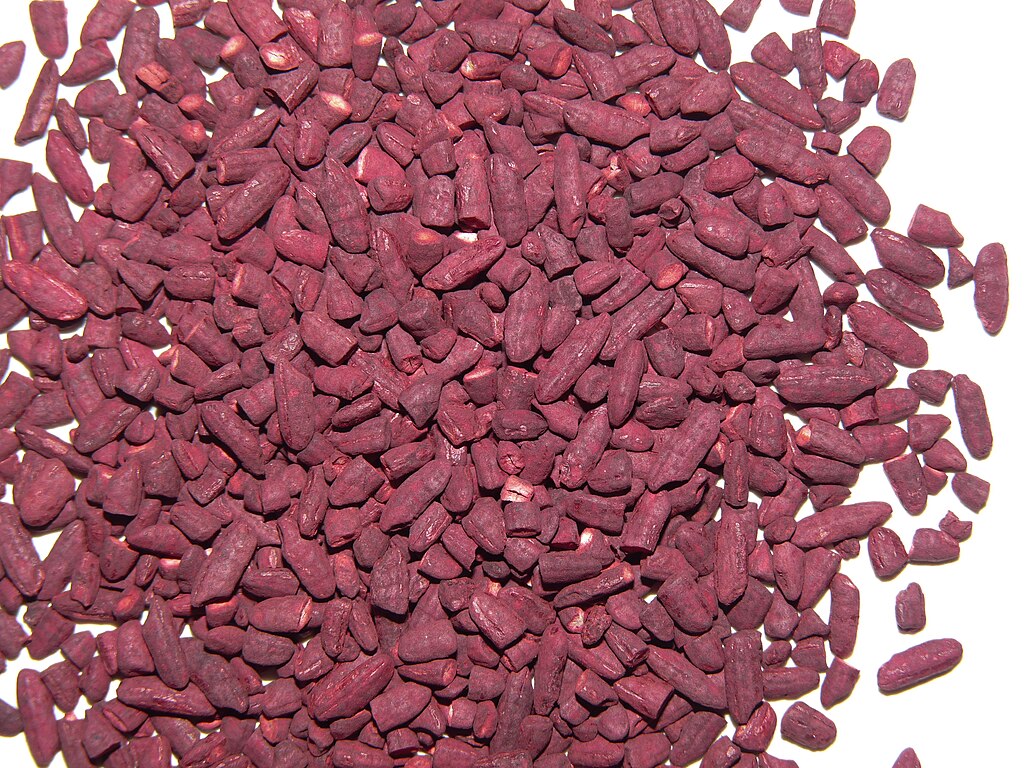
Rice has been a staple crop in Asia since the Neolithic, and its high starch content makes it a good candidate to make alcohol from. Unlike grapes and other fruits, rice is a grain, and it does not contain a lot of free sugar. This is also the case of barley or wheat, but the sugars in beer are released through malting, during which the grains germinate, releasing enzymes that degrade the starch inside the grains. Although rice can also be malted, this process has not been traditionally used in Asia. Instead, mold grows on the rice, and it liberates enzymes to degrade the starch and feed on the released sugars. While the Japanese koji is mainly composed of mold from the Aspergillus genus, the Chinese qu has more variety, including molds from the genera Rhizopus and Monascus. A species from this last family, Monascus purpureus is characteristically red, and it is the main component of Red Yeast Rice, a Chinese medicinal product that does not contain any yeast but has been used during the last two millennia to promote blood circulation and prevent cardiovascular diseases.
There are also yeasts that can assist in the breakdown of starch molecules, such as Saccharomycopsis fibuligera, found in huangjiu. The release of sugars from the starch is important for the production of alcohol by baker’s yeast. Besides European wine and beer, sake was also an early source to study yeasts. At the beginning they were thought to be different species, but thanks to genetic analysis, it was proved that despite the large geographical distance, baker’s yeast is a single species involved in alcoholic beverages across the world.
Molds and baker’s yeast are not alone, and plenty of other bacteria and yeasts are present both in the qu starter as well as in the final fermented liquid. While baker’s yeast might be just one among many microorganisms at the beginning, during the fermentation process and as alcohol is accumulated, baker’s yeast becomes more and more prominent. The traditional brewing process of huangjiu and other traditional Asian drinks was based on open fermentations, which allowed a rich biodiversity of microorganisms having a big impact on the final flavor profile. Some of these microorganisms are yeasts and the analysis of one huangjiu fermentation identified Issatchenkia orientalis and Wickerhamomyces anomalus as important yeasts for the development of flavor and aromas. However, each huangjiu production site contains a different collections of microbial biodiversity, and different bacteria and yeasts give different huangjiu products distinct flavors. The traditional lack of control on the microbial composition of huangjiu will change with the development of standardized and controlled practices, but it is reminiscent of a Chinese alcohol fermentation tradition that expands millennia.
History of alcohol production in China
Mythological origins
For a long time, the origin of alcohol production in China was part of a mythical past and diverse culture heroes were considered responsible for its invention. Out of the different candidates, Du Kang rose in popularity to become the God of Wine in Chinese popular religion. He is first mentioned as the “ancestral teacher of the brewers” in the Book of Rites, a collection of texts believed to be compiled at the beginning of the Han Dynasty (206 BCE – 220 CE) from earlier texts. Du Kang appears through history as the master brewer, and in one legend he was able to make the famous poet Liu Ling fall into a drunk stupor for three years with just a cup of his wine.
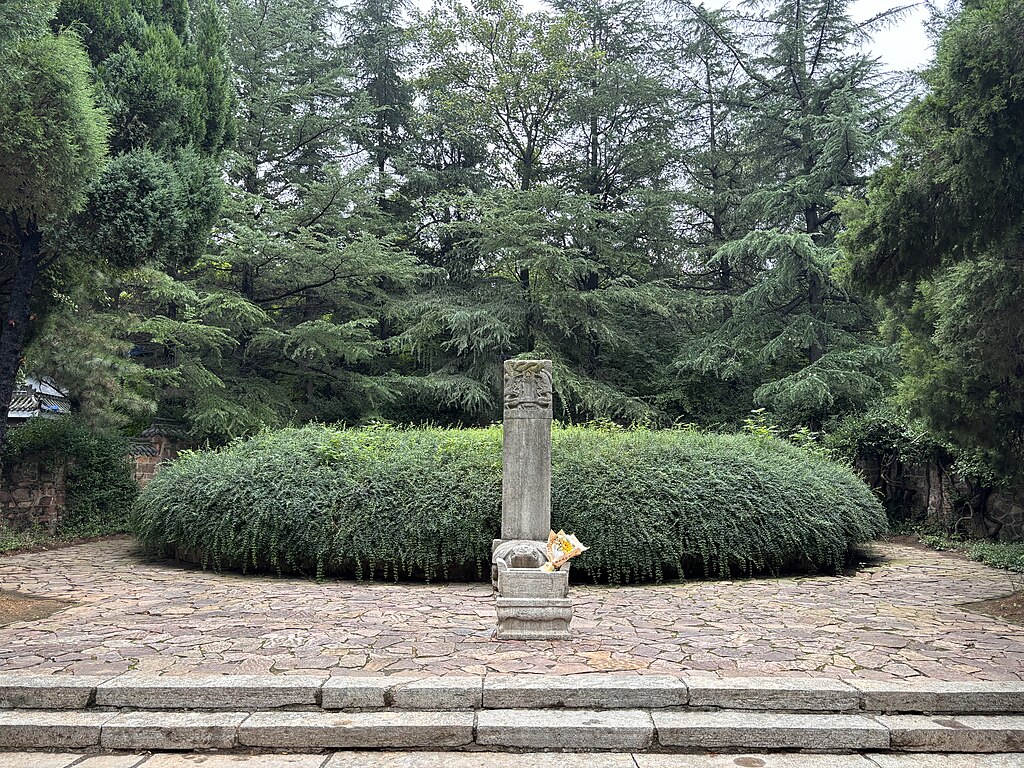
Trying to give him a historical basis, Du Kang has been identified by some authors as Shao Kang, the sixth king of the legendary Xia dynasty. The Xia dynasty is the previous one to the Shang dynasty (1600-1046 BCE), from which the oldest written Chinese records are preserved. Actually, the first references to alcohol come from oracle inscriptions from the Shang dynasty and they tell us that there were at least three types of alcoholic drinks at that time. While there is plenty of evidence for the stories around the Shang dynasty, the legendary tales around the Xia dynasty make it part of a mythical past. In fact, another candidate to “wine inventor” comes from the first generation in the Xia dynasty, founded by Yu the Great. According to the Book of Origins, written during the Han period, someone called Yi Di is identified as the first person who made an alcoholic drink. There are different accounts of who Yi Di was, maybe it was one of Yu the Great’s consorts, maybe it was his daughter or maybe his cook. The tale goes that Yi Di presented the new drink to Yu the Great, and although he was able to tolerate the alcohol, he forbade Yi Di from making more alcohol because of the danger it might cause to future rulers. However, Yi Di continued improving the drink, a task that was later taken over by Shao Kang/Du Kang.
Prehistorical evidence
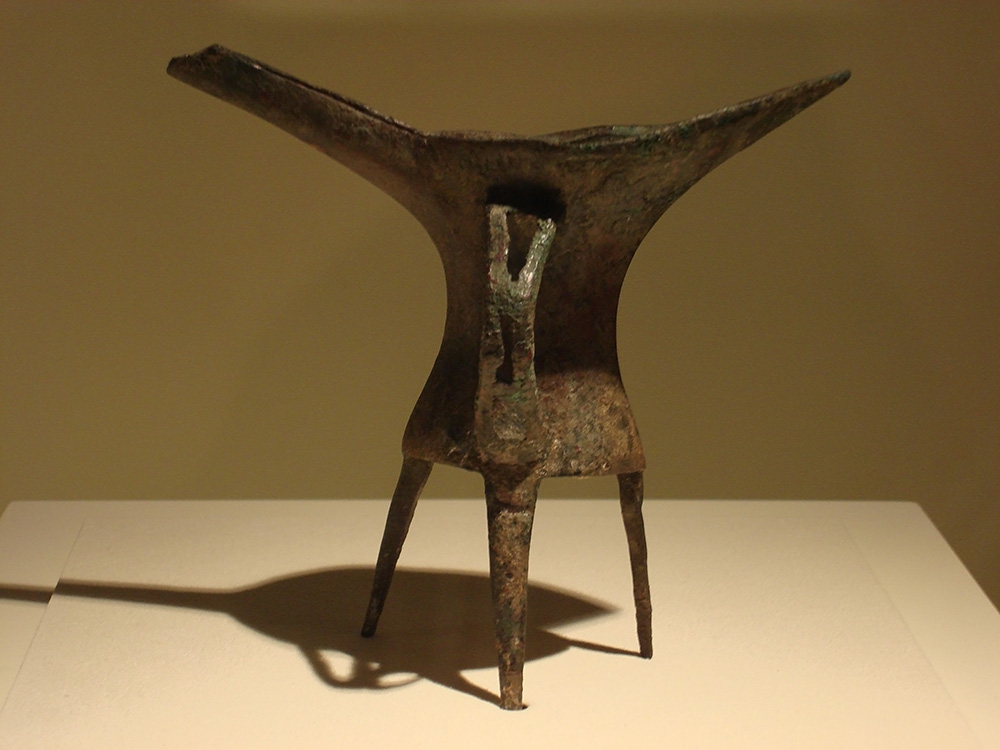
The Xia Dynasty has been identified by historians with some bronze cultures that predate the Shang dynasty. One of these cultures is Erlitou (2100 – 1500 BCE), whose archaeological evidence points to a stratified society that produced elaborate alcoholic drinks to be stored in bronze vessels, served in luxurious white clay vessels and consumed during exclusive ritual activities. The analysis of vessels associated with fermentation and alcohol drinking at the Erlitou site indicated that the alcoholic beverages consumed were mainly obtained from rice fermentation using a qu starter with Monascus as the primary mold. Yeast cells were also observed in some of the studied vessels, but no genetic analyses were carried out to identify these yeasts as baker’s yeast. The use of bronze vessels led to the extraordinary conservation of fermented beverages in tombs from the Western Zhou dynasty (1046-771 BCE). After 3000 years, some of these vessels were still half full thanks to the corrosion of the bronze, which sealed off the liquid and prevented any further evaporation.
While ancient Chinese texts might have looked at the Xia dynasty as the origin of alcohol, the archaeological evidence marks the starting point much earlier. Two neolithic sites in the two main Chinese rivers, the Yellow River and Yangtze River, show indications of alcohol fermentation that have been dated as early as 9000 years ago. In Neolithic times, these two rivers provided very different conditions which led to different crops being cultivated in the early development of agriculture. While in the cultivation of rice began in the Yangtze river, the area of the Yellow River favored the cultivation of millet. Microscopic analysis of vessels from the Qiaotou site near the Yangtze River identified residues of rice, job’s tears, yeasts and mold. All these components together make the earliest evidence of rice wine made through the use of qu.
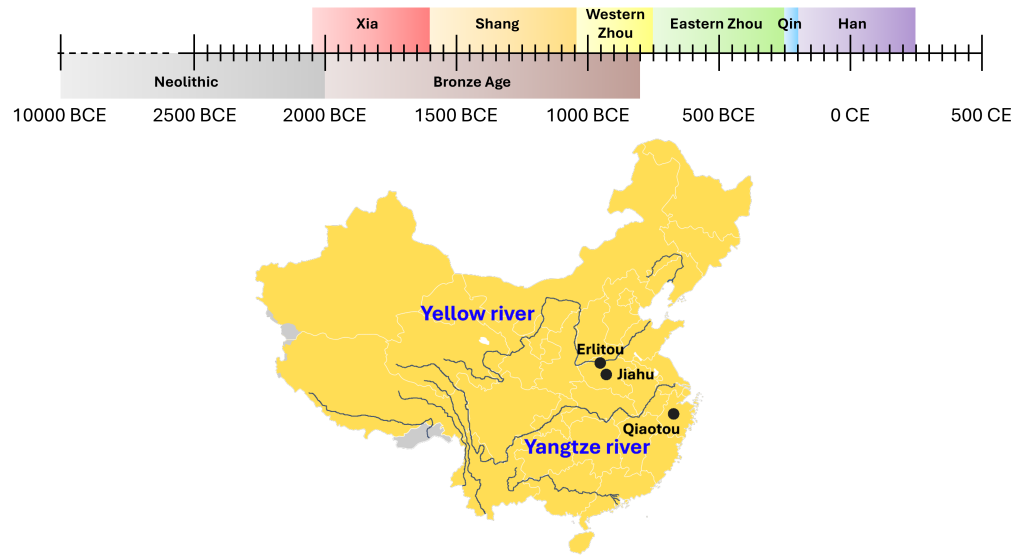
Similar ancient vessels were chemically analyzed from the Jiahu site, which is closer to the Yellow River. The analysis identified tartrate, a chemical that has traditionally been used as evidence of grape wine fermentation. Wild grapes grew in China, so it is possible that this is the earliest grape wine ever recorded, but another candidate that could produce tartrate upon fermentation is Chinese hawthorn. While other neolithic sites close to the Yellow River have shown evidence of millet beer, the analysis of the Jiahu vessels indicated that rice was used in the preparation of these drinks. A third component used was honey, since beeswax was observed as a leftover in the vessel fragments. All these components indicate that although rice was used, the main sugar source for this drink was fruits and honey. This means that no qu was needed for this alcoholic fermentation. Although with time the practice of making alcoholic beverages from fruits was lost in East Asia, it is possible that after originating there, the practice migrated westwards, influencing the early wine-making cultures studied in the Caucasus and beyond.
Conclusion written by AI
The story of yeast and alcohol in China is one of deep historical roots, rich cultural traditions, and remarkable scientific innovation. From the mythological tales of Du Kang to the archaeological evidence of Neolithic rice fermentation, China’s legacy in alcoholic beverage production spans millennia. The unique use of qu—a microbial starter rich in molds and yeasts—sets Chinese fermentation practices apart from those in the West and highlights the sophisticated understanding ancient brewers had of microbial processes long before microbiology was a science. While modern techniques have brought greater control and consistency, traditional methods still persist, preserving regional identities and microbial diversity. As research continues to uncover the origins and evolution of fermentation in East Asia, it becomes clear that China’s contributions to the global history of yeast and alcohol are both foundational and ongoing.
Sources
- Article on yeasts and molds involved in huangjiu production: Qi Peng, Huihui Zhou, Huajun Zheng, Guangfa Xie, Investigating the role of primary fungi in Huangjiu fermentation: Insights from flavor orientation and synthetic microbiomes, Food Microbiology, Volume 129, 2025, 104765, https://doi.org/10.1016/j.fm.2025.104765.
- Article on the microbes involved in huangjiu production: Gui-Mei Chen, Zi-Rui Huang, Li Wu, Qi Wu, Wei-Ling Guo, Wen-Hong Zhao, Bin Liu, Wen Zhang, Ping-Fan Rao, Xu-Cong Lv, Li Ni, Jin-Yuan Sun, Bao-Guo Sun, Microbial diversity and flavor of Chinese rice wine (Huangjiu): an overview of current research and future prospects, Current Opinion in Food Science, Volume 42, 2021, Pages 37-50, https://doi.org/10.1016/j.cofs.2021.02.017.
- Article on the importance of bacteria in huangjiu fermentation: Liu, S., Zhang, ZF., Mao, J. et al. Integrated meta-omics approaches reveal Saccharopolyspora as the core functional genus in huangjiu fermentations. npj Biofilms Microbiomes 9, 65 (2023). https://doi.org/10.1038/s41522-023-00432-1
- Article on the environmental microbiota of huangjiu fermentation sites: Qi Peng, Xueping Chen, Huajun Zheng, Kai Meng, Jianjiang Wu, Guangfa Xie, Lili Zhang, Xinxin Feng, Linyuan Li, Shunan Fang, Yuhao Zhang, Hefeng Yu, Spatial and temporal distribution of environmental microbiota in Chinese rice wine (Huangjiu) natural fermentation wineries, Food Bioscience, Volume 55, 2023, 102929, https://doi.org/10.1016/j.fbio.2023.102929.
- Article on the yeast from sake: Yoshikazu Ohya, Mao Kashima, History, lineage and phenotypic differentiation of sake yeast, Bioscience, Biotechnology, and Biochemistry, Volume 83, Issue 8, 3 August 2019, Pages 1442–1448, https://doi.org/10.1080/09168451.2018.1564620
- Article on Baijiu and its microbiome: Guangyuan Jin, Yang Zhu, Yan Xu, Mystery behind Chinese liquor fermentation, Trends in Food Science & Technology, Volume 63, 2017, Pages 18-28, https://doi.org/10.1016/j.tifs.2017.02.016.
- Article on the microbial diversity and production of qu: Xia, Y., Luo, H., Wu, Z. et al. Microbial diversity in jiuqu and its fermentation features: saccharification, alcohol fermentation and flavors generation. Appl Microbiol Biotechnol 107, 25–41 (2023). https://doi.org/10.1007/s00253-022-12291-5
- Webpage with information on Du Kang
- Article on alcoholic evidence at Erlitou archaeological site: He Y, Zhao H, Liu L and Xu H (2022) Brewing and Serving Alcoholic Beverages to Erlitou Elites of Prehistoric China: Residue Analysis of Ceramic Vessels. Front. Ecol. Evol. 10:845065. doi: 10.3389/fevo.2022.845065
- Article on alcoholic evidence at Jiahu archaeological site and tombs from the Zhou dynasty: P.E. McGovern, J. Zhang, J. Tang, Z. Zhang, G.R. Hall, R.A. Moreau, A. Nuñez, E.D. Butrym, M.P. Richards, C. Wang, G. Cheng, Z. Zhao, & C. Wang, Fermented beverages of pre- and proto-historic China, Proc. Natl. Acad. Sci. U.S.A. 101 (51) 17593-17598, https://doi.org/10.1073/pnas.0407921102 (2004).
- Article on alcoholic evidence at Qiaotou archaeological site: Wang J, Jiang L, Sun H (2021) Early evidence for beer drinking in a 9000-year-old platform mound in southern China. PLoS ONE 16(8): e0255833. https://doi.org/10.1371/journal.pone.0255833
 English
 Spanish