
By the end of the 19th century, there had already been substantial advances in yeast research. It had been proven that yeasts were living organisms and that fermentation was a biological process. The introduction of the enzyme concept allowed scientists to differentiate between the active principles secreted by yeasts (e.g., invertase, which converts sucrose into glucose and fructose) and the consumption of sugars to produce alcohol. This situation set the stage for further developments, such as proving that even alcohol production was controlled by enzymes and that different yeasts had the ability to consume different sugars. However, to achieve this, it was necessary to properly identify different yeast species, which required isolating them growing them into pure cultures.
Isolating Single Yeast Cells
Although yeasts had already been studied for years, there was no way to prove that a single species was being examined. This was because different species can appear similar under a microscope. For yeast research, obtaining a community of cells originating from a single one (a pure culture) is crucial. Pure cultures allow to study how yeasts behave, how fast they grow, and which substrates they consume.
The first pure culture from a single yeast cell was obtained in 1883 by Emil Christian Hansen, a Danish scientist working for the Carlsberg brewery. He used a microscope to count the cells in a droplet of liquid. Based on the number of cells per volume of liquid (cell concentration), he took a small amount in which, in theory, there would be a single cell. Of course, it was possible that there was more than one yeast cell or none at all. Therefore, his next step was to add the small volume containing the yeast cell(s) to a larger flask with more growth medium. He did not shake the flask, allowing the yeast cells to settle at the bottom. By monitoring the bottom, he could observe a small mass of cells forming where a yeast cell had landed. If only one such mass formed in the flask, he had obtained a pure culture.
This method was far from optimal, and after visiting other microbiologists, Hansen improved it. Molds and bacteria had been isolated before yeasts. The first to do so was Brefeld, who successfully isolated molds using solid media made with gelatin. However, this technique was not useful for isolating bacteria, as gelatin melted at 37°C, the optimal growth temperature for bacteria like Escherichia coli. This issue was resolved by Fannie Hesse, an American microbiologist who, during her travels through Indonesia, observed that an algae-derived product called agar was used to make jams due to its gelatinizing properties. Since agar remained solid at higher temperatures than gelatin, it became a suitable medium for bacterial isolation. She introduced this material to Robert Koch, who had been using boiled potatoes for bacterial isolation. Another significant development at this time was the invention of the Petri dish by Julius Petri, which allowed solid media made with agar to be kept sterile and prevented desiccation.
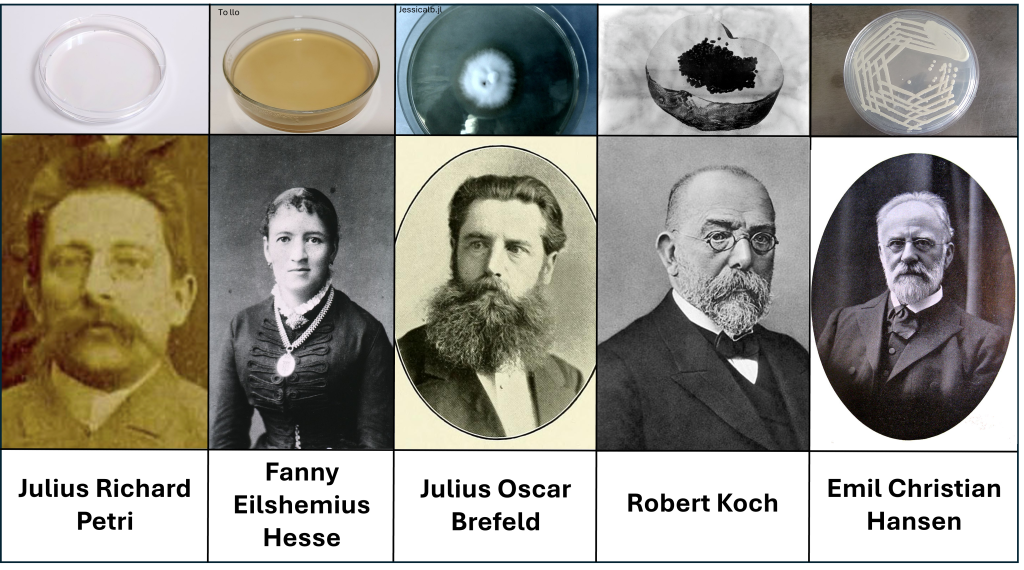
The ability to isolate yeasts was quickly applied in both science and industry. At Hansen’s Carlsberg brewery, beers occasionally developed a bitter taste and an unpleasant odor. Hansen suspected that this was due to a mix of different yeast species, so he began isolating pure cultures from the beer. He found that only one of these cultures consistently produced high-quality beer. Thus, Hansen pioneered the practice of using pure cultures in breweries, a standard that remains in place.
Discovering and Studying New Yeasts
Isolating yeasts was also essential for identifying new yeast species, as mixed cultures could be separated, allowing individual species to be properly described. Pure cultures enabled Hansen to describe the baker’s yeast in much greater detail than had been done before, and the name he used, Saccharomyces cerevisiae, has been its standard scientific name ever since. Between 1880 and 1900, 130 new yeast species were described.
Many of these yeasts were isolated from fermented beverages worldwide, such as ginger beer, sake, and an East African millet beer called pombe. The latter gave its name to a famous yeast used in research, Schizosaccharomyces pombe, which has a unique mode of cell division. Unlike uneven division of baker’s yeast and other budding yeasts, which produce daughter cells smaller than the mother cell, Schizosaccharomyces pombe divides evenly, with no clear mother-daughter relationship. The prefix “schizo,” as in schizophrenia, refers to the way these yeast cells split in half when they divide. Due to this feature, this yeast is commonly known as “fission yeast”.

Another important yeast discovered during this time was Kluyveromyces marxianus, described by the Dutch microbiologist Martinus Beijerinck. This yeast was identified in kefir, a milk-based drink from the Caucasus made using kefir grains, which consist of yeasts and bacteria living together. The most significant feature of Kluyveromyces marxianus was its ability to degrade lactose, the primary sugar in milk, an ability that the baker’s yeast lacks. Beijerinck also developed the auxonographic method to determine which compounds a microorganism could utilize for growth. This method involved adding yeasts to a solid medium lacking either necessary carbon or nitrogen sources. The potential nutrient sources were applied to different areas, and growth was observed where the yeast was able to utilize the substrate.
The ability of different yeasts to utilize various sugars was extensively studied by Emil Fischer, a prominent organic chemist. He became interested in yeasts due to Pasteur’s work and because his father was on the board of a brewery. Fischer used his knowledge of yeasts to improve brewing processes and combined his research with studies on the chemical structure of sugar molecules. By testing both natural and synthetic sugars, he determined that a sugar’s structure influenced whether yeasts could ferment it. He concluded that this was due to the necessity of a structural match between yeast enzymes and sugar molecules. He compared this relationship to a key fitting into a lock, an analogy that laid the foundation for explaining enzyme function.
Extracting Enzymes from Yeasts
By this time, enzymes were already known to exist, though primarily those that were secreted, such as invertase. It was easy to observe that sucrose could still be broken down even after yeast cells were removed. However, there was still debate about what occurred inside the cell. Some scientists resisted the idea that intracellular processes were purely chemical reactions independent of a vital energy, an idea defended by proponents of vitalism. Consequently, there were efforts to prove that fermentation could occur even after cells were killed and their contents extracted.
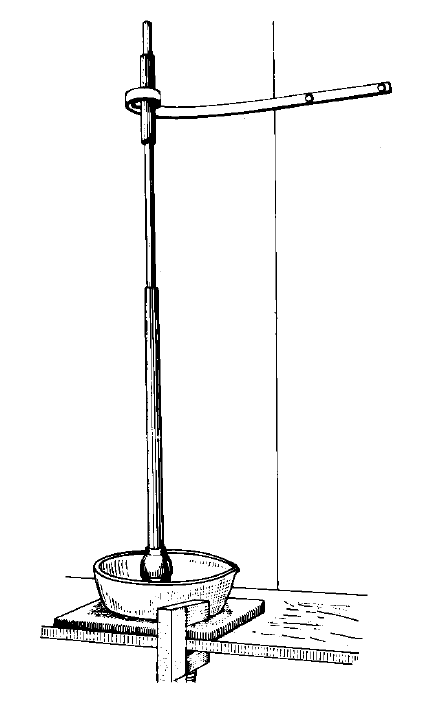
After several failed attempts by other scientists, Eduard Buchner was the first to obtain a cell-free extract capable of converting sugar into ethanol and carbon dioxide. He accomplished this by washing the yeast cells, removing most of the water, and grinding them in a mortar with sand and rock material. He then pressed the mixture at high pressure, obtaining a juice that was able to ferment sugars. No cells were observed under the microscope. Most importantly fermentation also did not cease after adding toxic compounds, such as chloroform or arsenic. Buchner identified the substance responsible for fermentation as a protein and called it zymase, although we now know that multiple enzymes are involved in this process. Nevertheless, his work was the final nail in the coffin for vitalism, proving that biological activity is purely a matter of chemistry.
Conclusion made by AI
The discoveries and advancements in yeast research during the late 19th century laid the foundation for modern microbiology and biotechnology. From the isolation of pure cultures to the identification of new yeast species and the understanding of enzymatic activity, these breakthroughs not only improved industrial fermentation processes but also deepened our knowledge of cellular metabolism. The work of scientists like Hansen, Beijerink, Fischer, and Buchner demonstrated that biological processes could be understood through chemistry, ultimately dismantling the theory of vitalism. These early studies on yeasts continue to influence research today, contributing to fields ranging from brewing and baking to biofuels and medicine.
Source
This post is a part of a series summarizing the work on the history of yeast research done by James A. Barnett, this particular post is based on the third article of the series: A history of research on yeasts 3: Emil Fischer, Eduard Buchner and their contemporaries, 1880–1900, which was written with the collaboration of Frieder W. Lichtenthaler.
 English
 Spanish