
The use of dry yeast in bakery and beyond has many economic advantages. However, without control, dried yeasts normally die and become inactive. This limitation led to a race to develop processes to maintain yeast life during desiccation and rehydration, to produce good-quality Active Dry Yeast. This path was not easy, though, and while plenty of patents were filed over the years, only a handful of them can be considered breakthroughs in the development of Active Dry Yeast.
Benefits of Active Dry Yeast
Throughout history, yeast has been inoculated into bread in different ways. Although the sourdough starter is still in use, foam from beer brewing was the preferred method of the ancient Iberians. With the discovery of yeast as the agent of leavening, the inoculation practice changed. Fresh yeast can now be produced, either in cream form or in pressed cake form, and mixed directly with flour to produce bread. However, fresh yeast deteriorates over time if not refrigerated.
Pressed yeast cakes contain 70% water, which is a problem because water weighs a lot and occupies space. Water is a hurdle when transporting products, which is why dry fruit is more popular among hikers than fresh fruit. A larger weight and volume lead to higher costs in storage and transportation, which affects fresh yeast.
Another problem associated with water is, ironically, death. Biochemical processes require water, not only those that sustain life but also those that destroy cellular structures. Therefore, to keep fresh yeast active for as long as possible, they need to be refrigerated, since the cold will slow down the destructive chemical reactions. But refrigeration is costly, more so when transporting products.
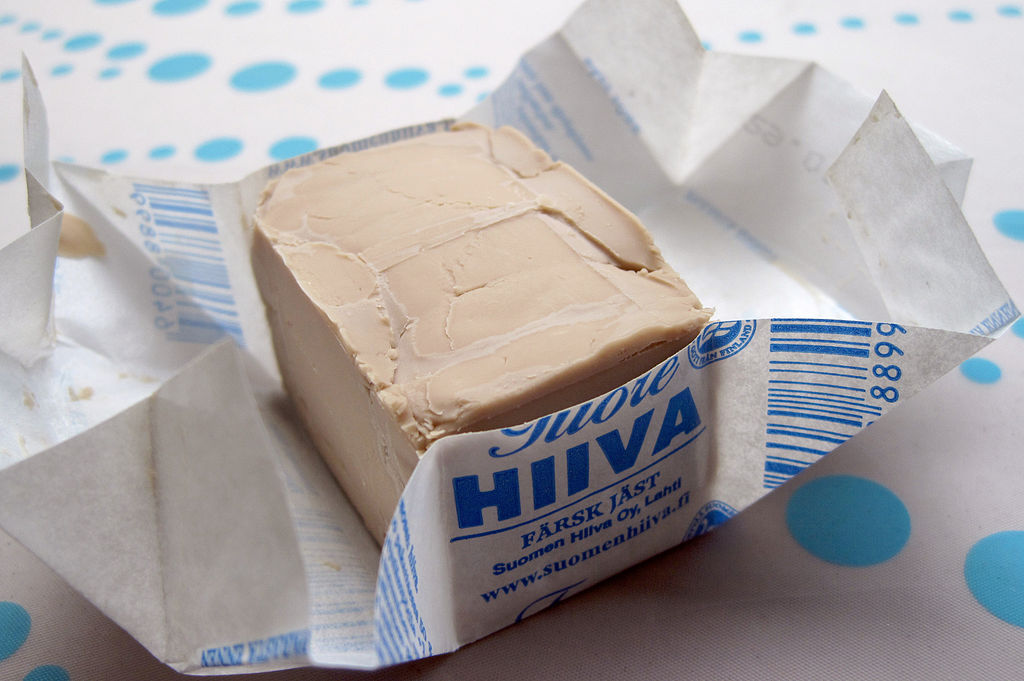
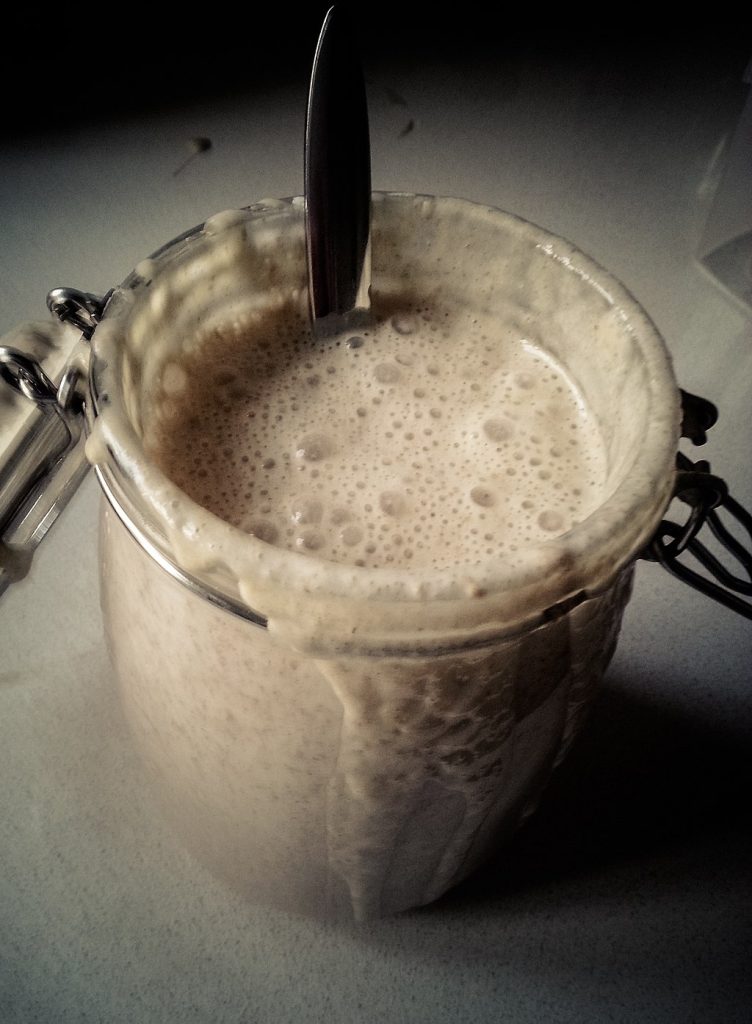
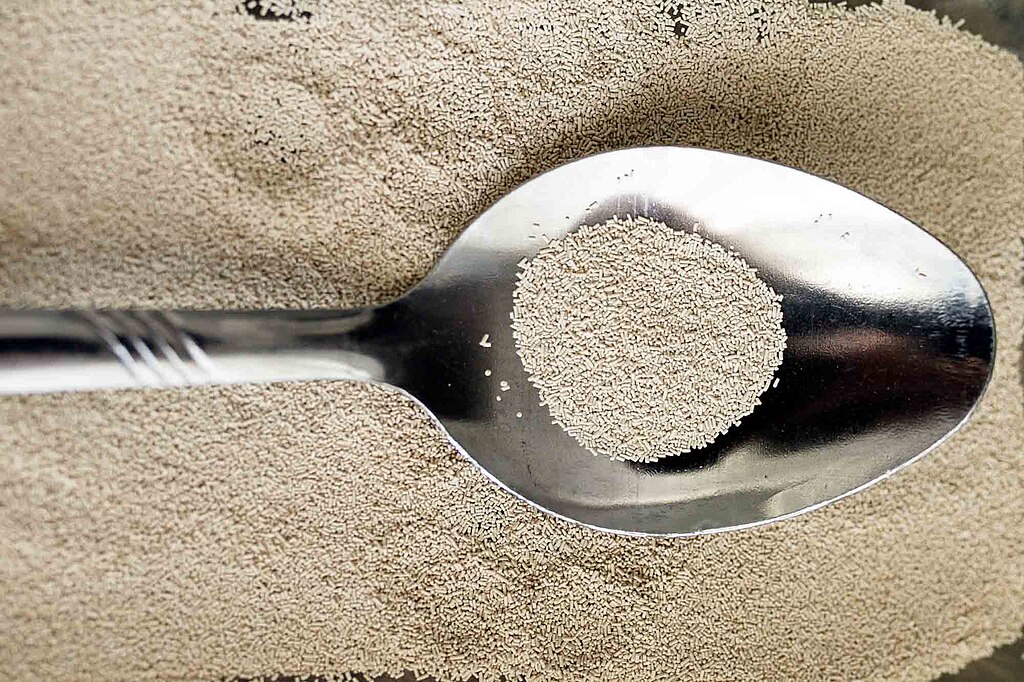
Using Active Dry Yeast solves these problems. Dried yeasts are lighter and occupy less space than fresh yeast. Beyond that, the reduction in water content virtually stops biochemical reactions, protecting the cells without the need for refrigeration. Ease of storage and transport was more important for bakeries last century, but even today, many use them over fresh yeasts because of their economic benefits.
Beyond bakery, Active Dry Yeast is also used in alcoholic beverages. Although wine fermentation can happen spontaneously, the use of Active Dry Yeast ensures a predictable fermentation and gives better control over the final alcohol content. On the other hand, Active Dry Yeast is not usually used in beer manufacturing, since breweries produce the necessary yeast in-house. Nevertheless, Active Dry Yeast is used in commercial kits aimed at brewing beer at home.
Despite its benefits and applications, producing effective Active Dry Yeast has been a challenge tackled by many innovators throughout the 20th century. While drying yeast is easy, different techniques had to be developed to make sure that it remained active after rehydration. High levels of yeast survival were only achieved after a number of discoveries were made, most of which were published in patents
Breakthroughs in patents
Studying the patents around Active Dry Yeast production offers an overview of the evolution in the understanding of the survival of yeast after desiccation. At the beginning, yeast producers thought that yeasts would die while drying, so they focused their efforts on making the drying process as slow and gentle as possible. To do so, they relied on using materials that would absorb water.
The first patent describing this process dates back to 1836, and it was granted to the Belgian Leep who developed a thin dry cake of leaven bread containing vinegar, Arabic gum, bran, and sugar. Using dried bread as inoculum was not exactly a revolution, since the bappir from Ancient Mesopotamia might have been something similar, and it also might be a reminiscence of the qu developed in Neolithic China.
The problem with using dry bread is that it provides low fermentative capacity and often produces bread with a sour taste. Until the mid-20th century, plenty of patents were filed exploring new compositions of desiccants that would improve yeast survival, trying materials such as flour, starch, salts, and even asbestos.
Despite the big effort, using desiccants ended up being a false lead, and the first patent that had a substantial impact on yeast survival was the one filed by Ohlhaver in 1911. He did not focus on how to dry the yeast, but on how to grow it before the drying step, for which oxygen was very important. He also reported that dry yeasts had to be stored airtight, because otherwise they would absorb moisture from the air. These innovations led to Florylin, a commercial Active Dry Yeast that had a 30% survival rate after rehydration, compared to less than 10% for other products.
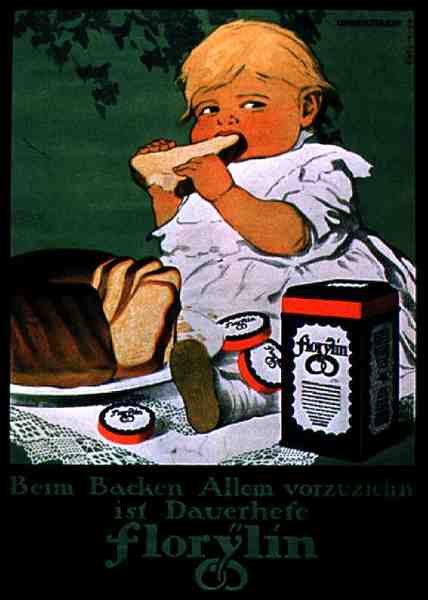
The current viability of Active Dry Yeast oscillates between 60% and 90%, so a lot of improvement took place after Florylin. This happened after the realization that yeasts did not die while drying, but they mostly die in the rehydration process. The use of temperatures around 40°C was described in a patent from 1937 filed by the company Norddeutsche Hefeindustrie AG, which had a great impact on yeast survival rates. After this, the final breakthrough was the use of surfactants and other chemicals that can protect cell membranes during rehydration.
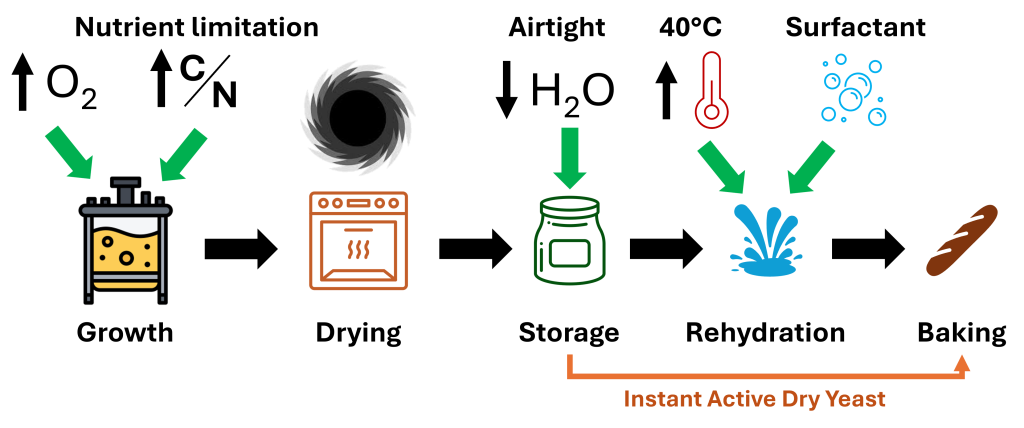
The culmination of innovation around Active Dry Yeast was the development of Instant Active Dry Yeast, which can be added to flour before baking without the need for a rehydration step. The patent for this invention was granted to Arend Langejan in 1978, and it describes dry yeast combined with cellulose-based materials acting as swelling agents, as well as lipids acting as wetting agents.
Engineering yeasts to survive desiccation
Sometimes technology is built on fundamental scientific knowledge, but not always. In the case of Active Dry Yeast, knowledge about important conditions for the rehydration was discovered through trial-and-error methods long before these were studied in academia. Studies on the effect of temperature for rehydration were first published by academic scientists about 20 years after this was discussed in patents. Of course, academic research looked more in-depth at this issue and was able to offer some theories explaining why warm rehydration is important for the vitality of Active Dry Yeast.
As eukaryotes, yeasts not only have a cellular membrane separating them from the exterior, but they also have plenty of internal membranes from a diversity of organelles, such as the nucleus and the vacuole. All these membranes are important, and they must act as barriers preventing the leakage of molecules. During the drying process, membranes get altered, although not broken. However, during the rehydration step, the transition back to the normal membrane structure must happen quickly to avoid membranes breaking down, leaking molecules, and causing cell death. Warmer temperatures allow the water to integrate faster into the cellular structures, limiting membrane damage and therefore increasing Active Dry Yeast viability.
The importance of membranes in the survival of yeasts also explains another important breakthrough in the development of Active Dry Yeast. Ohlhaver showed that growing yeasts with oxygen before the drying step was important. Years later, it was observed that this was due to the need for oxygen to produce sterols and unsaturated fatty acids, lipids important for the integrity of membrane structures under stress conditions.
Another important element in the growth previous to dehydration is the limitation of nutrients. This leads to baker’s yeast accumulating inside the cell a sugar called trehalose. This sugar is important for the survival of the yeast because it keeps the internal membranes separated from each other, and it helps to make the little water left in the cell interact with the membranes. Higher concentrations of trehalose have been linked to higher survival rates after rehydration.

The importance of trehalose has been taken advantage of to generate genetically engineered yeasts that are more resistant to desiccation. Already in 1990, a patent was granted to Marianne Driessen and her colleagues from DSM to protect a yeast strain with reduced trehalase activity, in other words, a yeast that could not degrade trehalose. Since then, different patents have been granted for other improved strains, including those in which the synthesis of trehalose is increased.
Conclusion written by AI
The history of Active Dry Yeast serves as a compelling case study in the relationship between science, technology, and intellectual property. Patents played a central role in the development of this technology, capturing both misguided attempts and transformative innovations. While the majority of patents represented false leads—such as the prolonged reliance on desiccants—a select few marked real breakthroughs that significantly advanced yeast viability and industrial application.
This pattern highlights a broader truth about the history of science and technology: meaningful progress often emerges from a sea of trial and error. Moreover, the story of Active Dry Yeast illustrates how, at times, technology can outpace scientific understanding, with key practical solutions being discovered long before they were fully explained by academic research.
Sources
- Article on the history of Active Dry Yeast through its patents: Gélinas, P. (2019), Active Dry Yeast: Lessons from Patents and Science. Comprehensive Reviews in Food Science and Food Safety, 18: 1227-1255. https://doi.org/10.1111/1541-4337.12445
- Article on the use of Active Dry Yeast in wine-making, including scientific insight on cell mechanisms: Schmidt, S.A. and Henschke, P.A. (2015), Active dried yeast in winemaking. Australian Journal of Grape and Wine Research, 21: 651-662. https://doi.org/10.1111/ajgw.12189
 English
 Spanish