
In 1897, Buchner used a cell-free extract from yeast to carry out fermentation. This was a breakthrough that showed that chemical reactions associated with life did not depend directly on the presence of a living organism. Buchner called the extract zymase, with the idea that there was just one component responsible for transforming sugar into ethanol. The scientific community later found out that there were 11 different chemical reactions, with each of them being controlled by a single enzyme. This is the story of how these discoveries took only around 30 years to make.
The common point between yeasts and muscles
Fermentation has many definitions, but when talking about metabolism, it usually refers to the breakdown of glucose into smaller organic molecules under anaerobic conditions, when oxygen is lacking. It is opposed to respiration when glucose molecules are completely broken down to CO2 with the help of oxygen. Pasteur studied the effect of oxygen on alcohol production in yeasts and observed that alcohol was mainly produced when oxygen was not available.
At the beginning of the 20th century, it was discovered that fermentation was also happening during exercise in muscles. However, in muscles, lactic acid was produced instead of alcohol. This happens during intense exercise so that the muscles can produce the required energy independently of oxygen supply. It was quickly acknowledged that the production of lactic acid in muscles was parallel to the production of alcohol in yeasts, and the study of both systems enabled scientists to understand fermentation metabolism.
The divergence between muscles and yeast fermentation metabolism happens at the very end of the breakdown of glucose. Pyruvic acid or pyruvate is a molecule that was already discovered in the 19th century. This molecule is obtained in all organisms from the breakdown of glucose, and it is the branching point for different metabolic destinations, including alcoholic fermentation, lactic fermentation, and respiration. In muscles, pyruvic acid is converted directly into lactic acid, while in yeasts, pyruvic acid is first converted into acetaldehyde and then into ethanol. The conversion steps from glucose to pyruvic acid are the same in yeast and muscles, and this process is known today as glycolysis.

Phosphate and cofactors
The first step in revealing the complexity of fermentation (and glycolysis) was the discovery that proteins/enzymes were not enough to make this reaction work. When Buchner used yeast cell-free extract to ferment glucose, he observed that not all the sugar added was fermented. He and other scientists thought that this was happening because the “protein” responsible for the fermentation was being degraded.
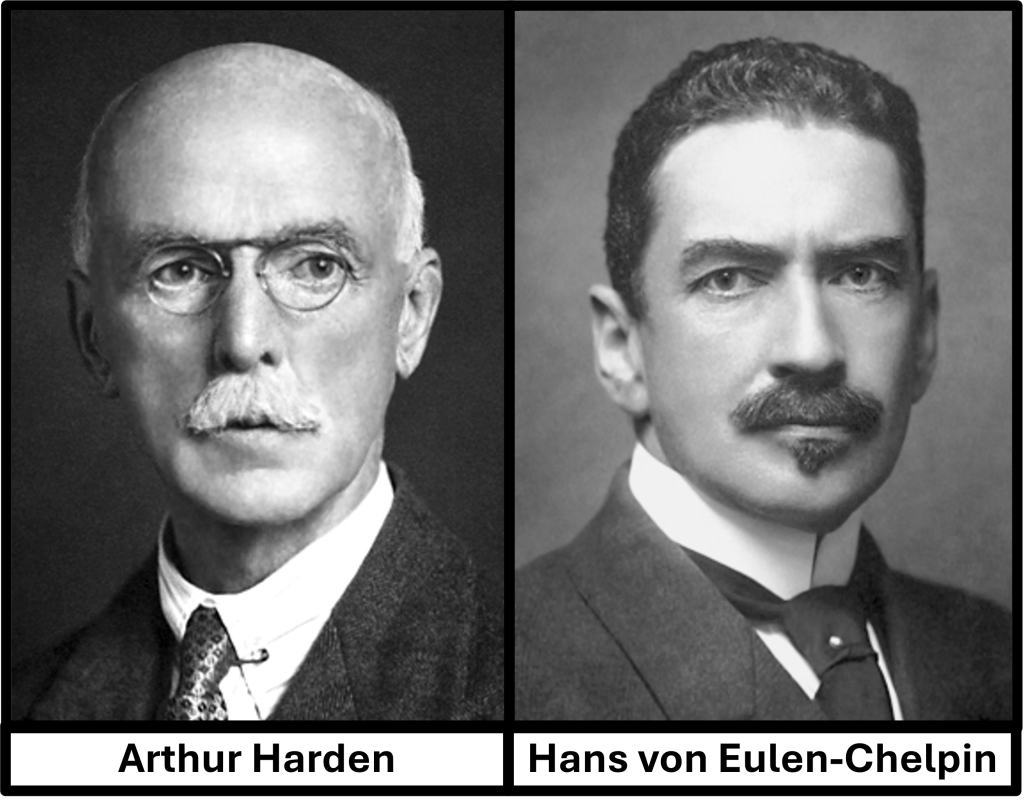
British biochemist Arthur Harden continued this line of research and sought to prevent protein degradation by adding horse blood serum. Adding this serum increased fermentation capacity, so Harden further investigated which of the components of the horse serum helped fermentation move forward. He found out that adding inorganic phosphate helped fermentation continue.
Since neither glucose nor alcohol contains phosphate, Harden hypothesized that there was an intermediary molecule containing phosphate. This meant the need for at least two steps in producing alcohol from glucose. Before discussing the intermediates, let’s talk about ATP. This molecule was determined by Lippman in 1941 to be the main way cells use energy for biosynthetic processes. ATP was discovered earlier, in 1929, by Lohrmann. At this time, Harden and other scientists thought the role of ATP was just serving as a phosphate donor to allow the chemical reactions to continue.
Besides phosphate and ATP, Harden also identified another component that was necessary for the fermentation to continue. This component was not a protein, since it was resistant to heat, and it was named co-ferment, but later called co-enzyme. It was Hans von Euler-Chelpin who determined that this co-enzyme is what we call today NAD.
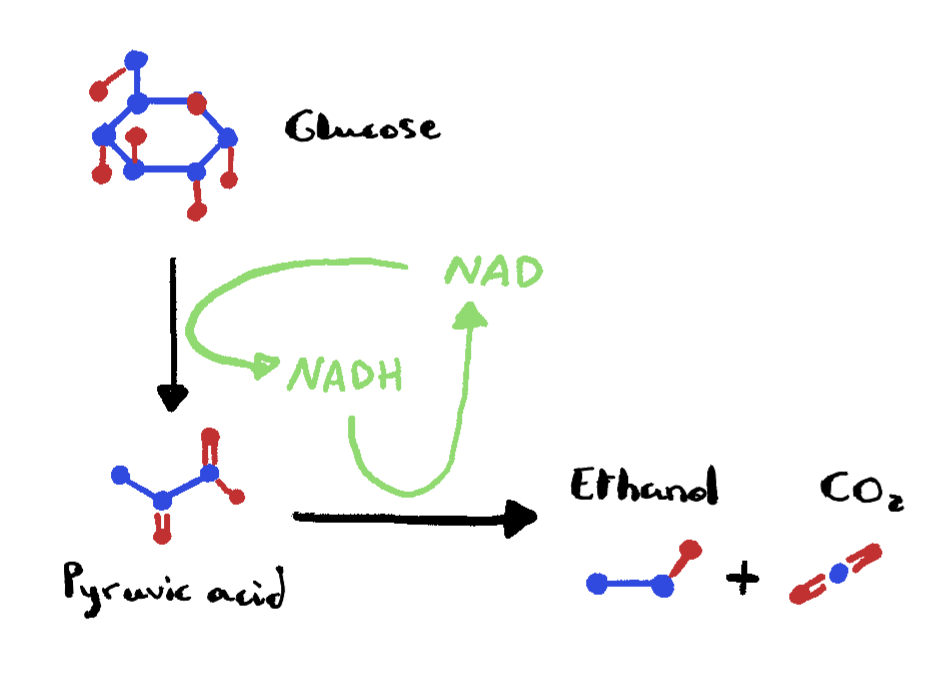
While ATP was seen as a cofactor necessary for the exchange of phosphate, NAD was necessary for the exchange of hydrogen. Von Euler showed that during the breakdown of glucose to pyruvic acid, NAD obtained hydrogen to form NADH. Most importantly, this NADH had to be converted back to NAD, which happened during lactic acid or ethanol synthesis. This explained why fermentation finished with these products and not just pyruvic acid. Harden and Von Euler received the Nobel Prize in Chemistry in 1929 for their studies on fermentation.
From one to many: Mapping fermentation
Going back to intermediaries between glucose and ethanol, Harden was the first to identify one. Looking into the role of phosphate, he found a sugar with two phosphate groups, later identified as fructose 1,6-bisphosphate. Harden hypothesized a fermentation pathway based on two steps. First, the phosphorylation of one sugar molecule allows the breakdown of another sugar molecule into alcohol and CO2. Second, the phosphorylated sugar gets recycled by removing the phosphate.
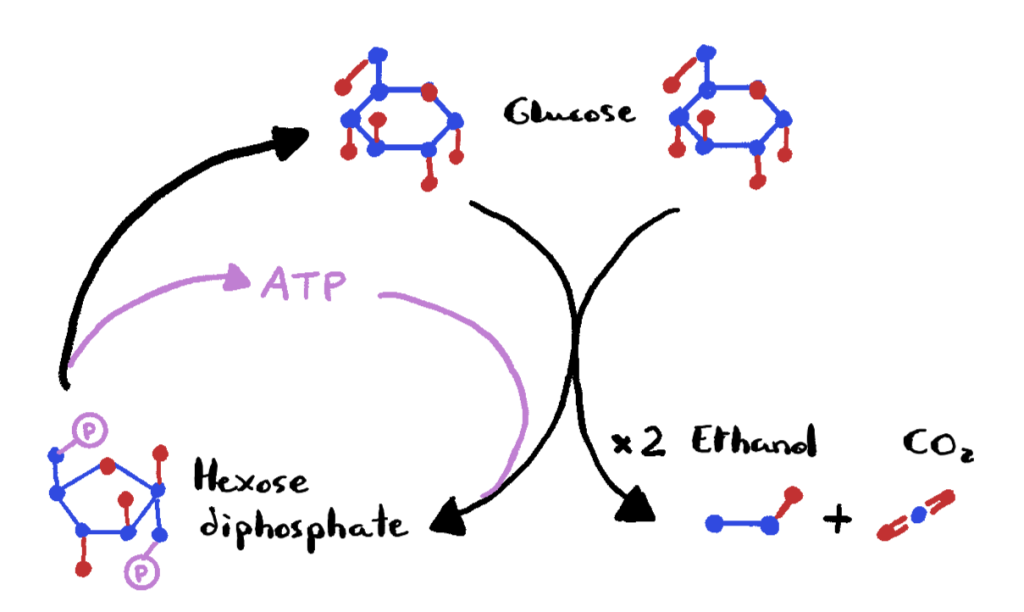
However, evidence was pointing in another direction. Other phosphorylated sugars were discovered (glucose 6-phosphate and fructose 6-phosphate), which would require more than two steps. Although Harden discovered one of them, he considered it a leftover of a failed fermentation reaction. Harden remained convinced that phosphorylated sugars were required to break down other sugars, even when he won the Nobel Prize.
Further evidence against Harden’s hypothesis was the importance of three-carbon molecules, such as pyruvic acid. Between 1910 and 1920, Neuberg and his team established the role of pyruvic acid in the fermentation pathway. It was produced during the fermentation of sugars, and it was converted into acetaldehyde and CO2, and the acetaldehyde was then converted into ethanol.
Another way to find intermediates of fermentation was to see if they could be fermented, if they could be used by yeast to produce alcohol. This was the case of glyceraldehyde and dihydroxyacetone. Russian biochemist Lebedev found out that the phosphorylated sugar observed by Harden (fructose 1,6-bisphosphate) was produced when using dihydroxyacetone as a fermentation substrate. Based on this, he proposed that glucose is split into glyceraldehyde and dihydroxyacetone. The first would lead to ethanol through pyruvic acid, while the second one would do it through sugar phosphate production.
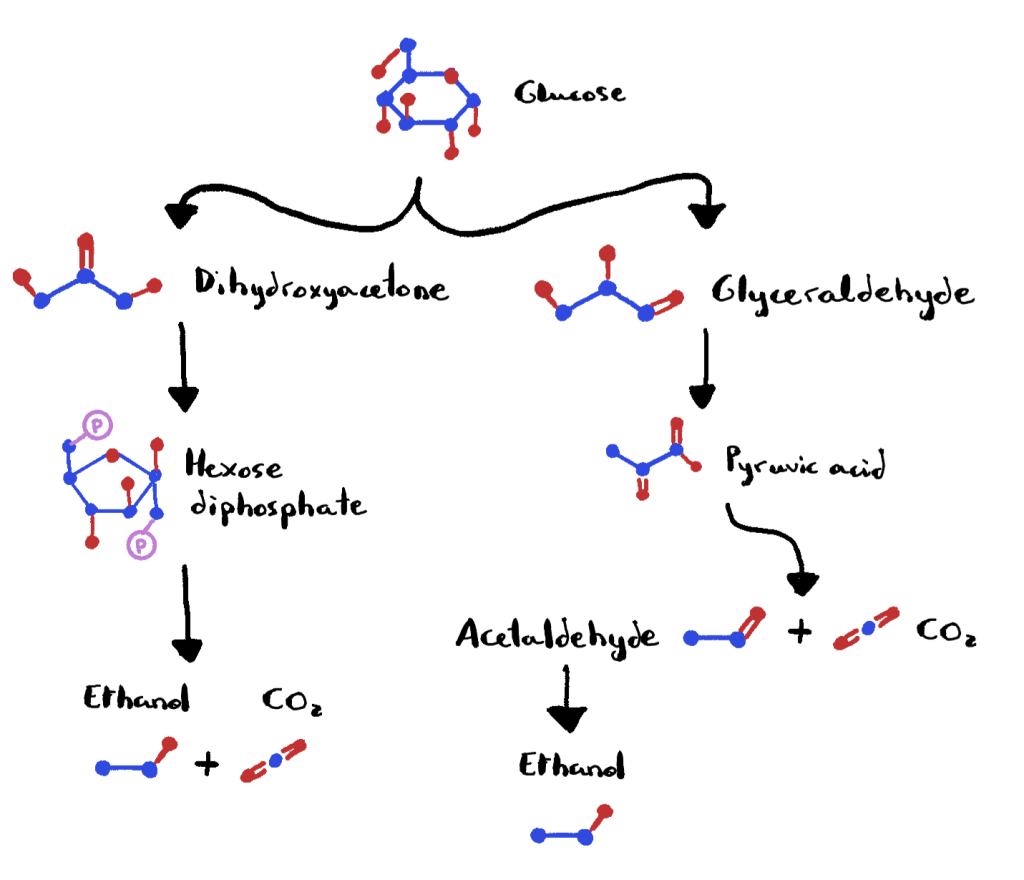
Lebedev’s hypothesis was still far from the real process. More intermediates had to be identified, but it was difficult because some of them are consumed as soon as they are produced. To identify these “invisible” intermediates, scientists used inhibitors. For example, fluoride ions or iodoacetate were used to study fermentation. These compounds block the fermentation at different steps, leading to the accumulation of the molecule that had to be converted. In this way, intermediates such as glyceraldehyde 3-phosphate or glycerate 2-phosphate were discovered.
The discovery of the different intermediates was not enough to understand the whole conversion of glucose to ethanol. The recognition that some of these reactions were bidirectional was also important, which, for example, explained why Lebedev had observed the production of phosphorylated sugar from a three-carbon molecule. The final step to decipher the fermentation pathway was to consider that all reactions were controlled by enzymes and move on from classical chemistry.
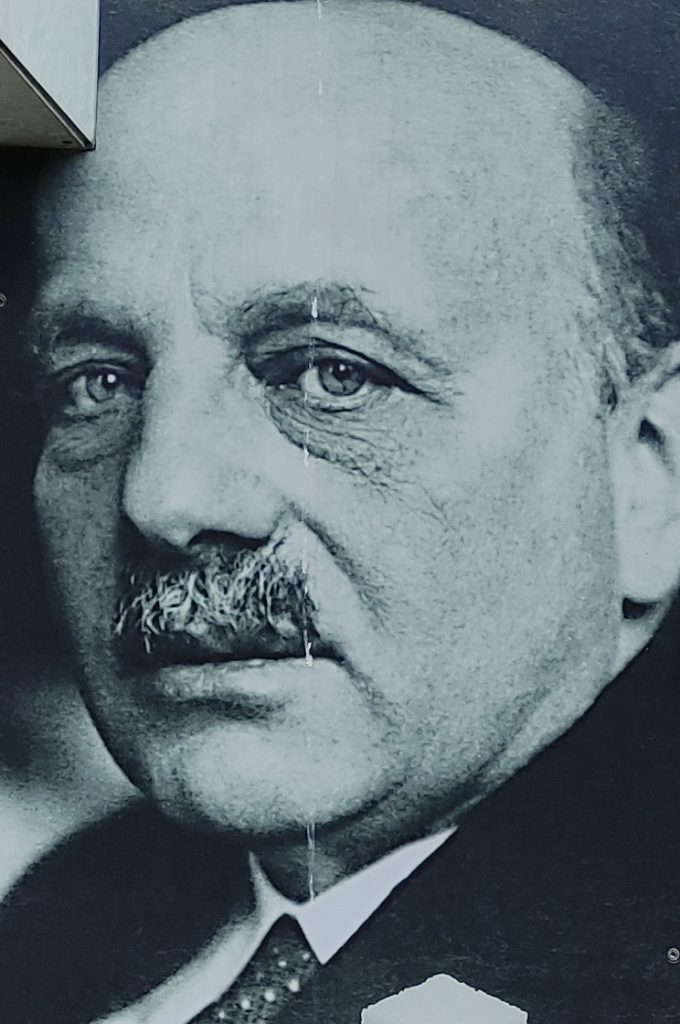
Embden was the one to gather all these considerations and bring together the reactions that we recognize today to be the glycolytic pathway. He described how sugar was phosphorylated in more than one stage, and that the sugar with two phosphates was split into three-carbon molecules. These molecules would proceed through additional three-carbon intermediates to end up producing pyruvic acid. He died shortly after describing this pathway, but today the reactions from glucose to pyruvic acid are also known Embden–Meyerhof–Parnas (EMP) pathway, recognizing his contribution and that of other scientists who helped decipher these reactions.

Conclusion written by AI
The journey to understand fermentation was a milestone in the history of biochemistry, demonstrating that complex biological reactions could be explained by chemistry alone. From Buchner’s groundbreaking discovery of cell-free fermentation to the eventual mapping of the glycolytic pathway by Embden and others, scientists uncovered a stepwise, enzyme-controlled process that operates in both yeast and muscle cells. These discoveries not only disproved vitalism but also laid the foundation for modern metabolic science. Fermentation, once seen as a mysterious life force, became a model for how cells generate energy and maintain chemical balance, even in the absence of oxygen. The unraveling of these pathways over just a few decades is a testament to the power of careful experimentation and collaboration in scientific discovery.
Source
This post is a part of a series summarizing the work on the history of yeast research done by James A. Barnett, this particular post is based on the fifth article of the series: A history of research on yeasts 5: the fermentation pathway.
 English
 Spanish